







How Much Electricity Does a 1.5 Ton AC Use in Pakistan

A 1.5 Ton AC is one of the most popular choices for homes, bedrooms, living rooms, offices, and other medium-sized spaces in Pakistan. With electricity prices and summer temperatures becoming an important concern for households, many people ask the same question before buying an air conditioner: How much electricity does a 1.5 Ton AC use in Pakistan?
The answer depends on several factors. The type of compressor, inverter technology, energy efficiency, room size, outdoor temperature, AC temperature setting, daily usage, insulation, maintenance, and even the condition of the AC can affect electricity consumption.
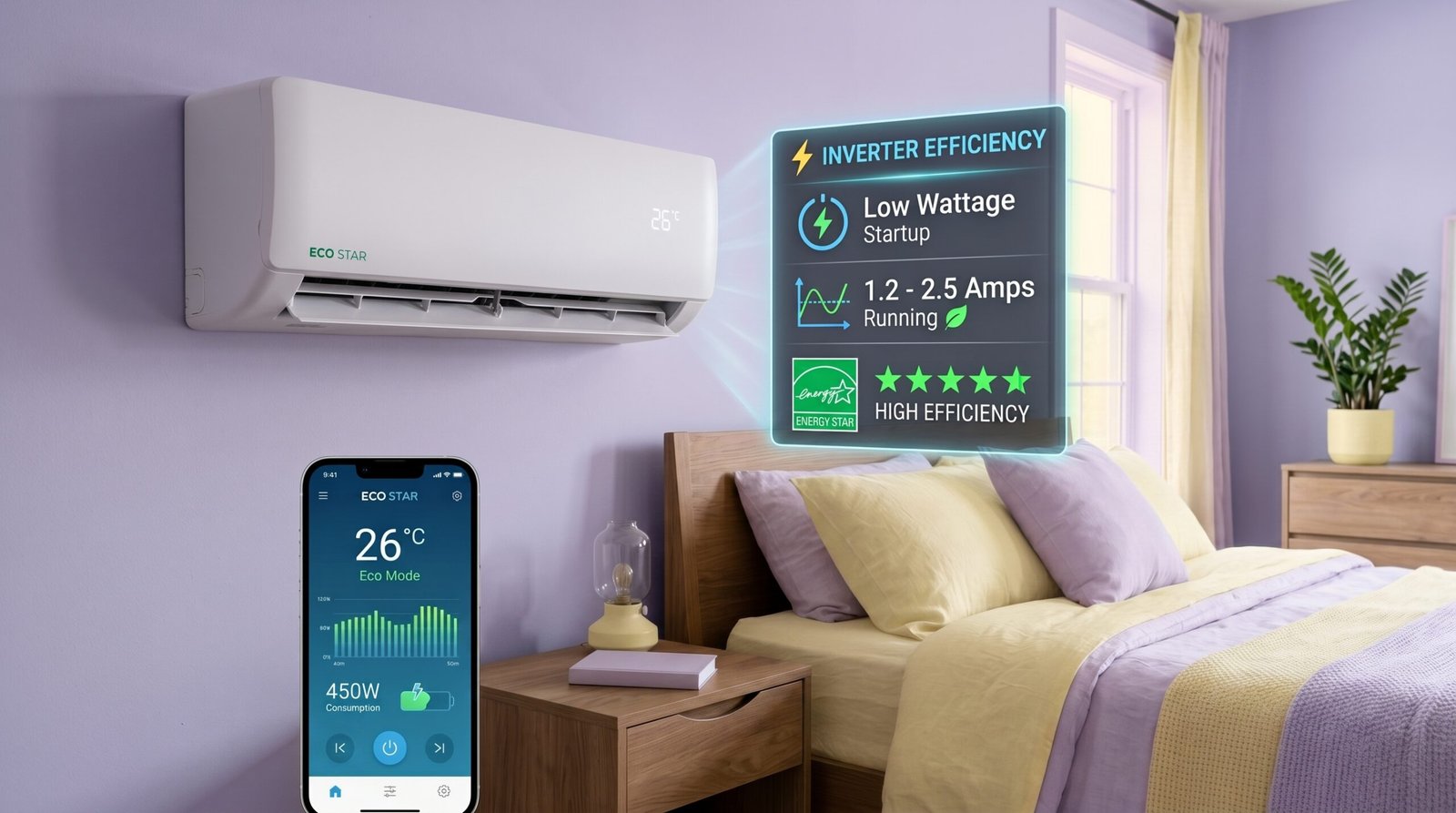
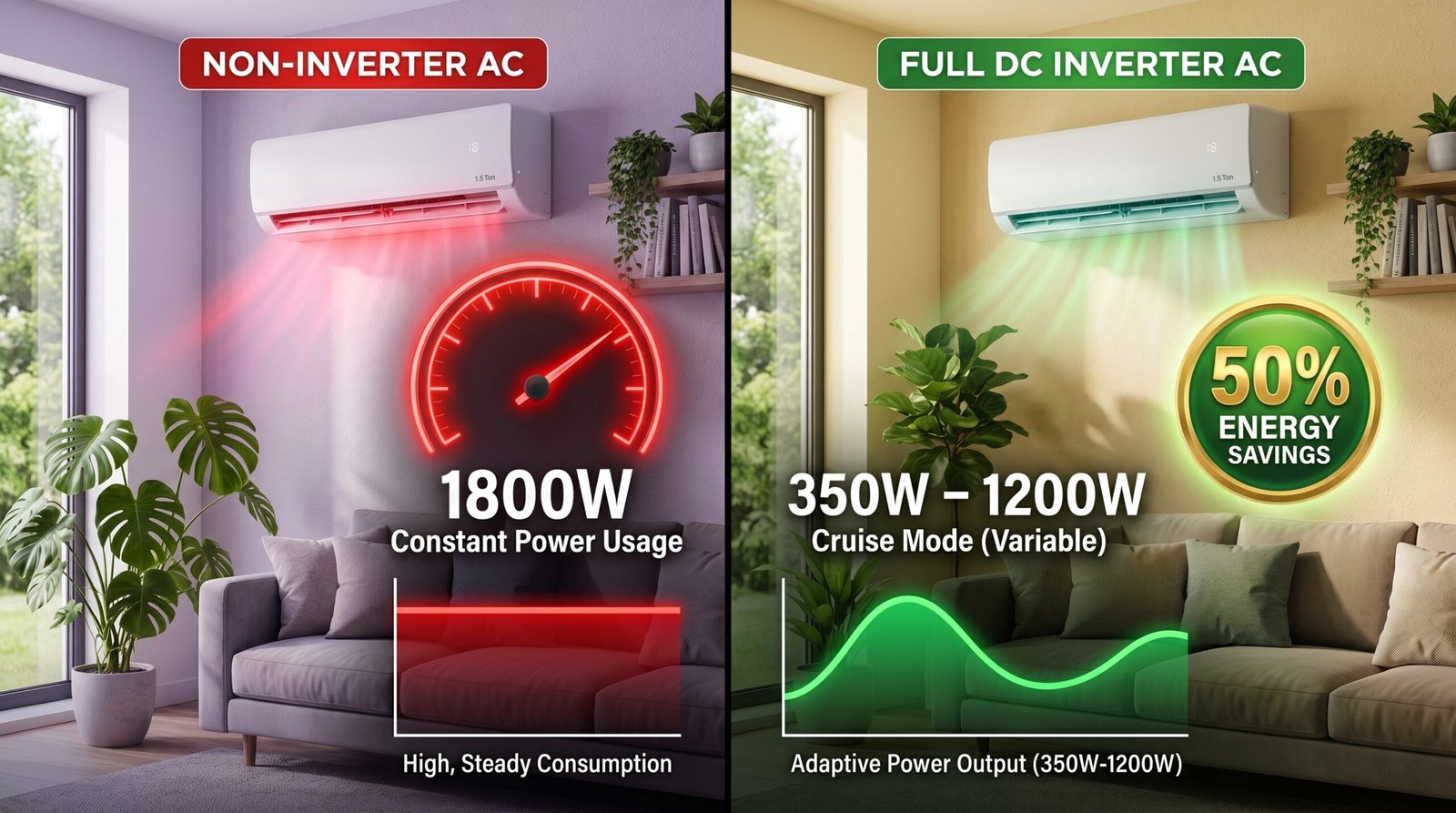
A modern 1.5 Ton inverter AC can be more energy-efficient than an older conventional AC, particularly when it is used for several hours every day. Inverter technology allows the compressor to adjust its speed according to the cooling requirement, which can help reduce unnecessary electricity consumption once the desired room temperature has been reached.
For Pakistani consumers, this is especially important because air conditioners can become one of the biggest electricity-consuming appliances during summer. A suitable AC can provide comfortable cooling without unnecessarily increasing your electricity bill.
In this guide, we will explain how much electricity a 1.5 Ton AC can consume, the difference between inverter and non-inverter ACs, how room conditions affect electricity usage, what T3 technology means, and how you can reduce your AC electricity consumption.
What Does 1.5 Ton AC Mean?
Before understanding electricity consumption, it is important to understand what “1.5 Ton” actually means.
The term “Ton” in an air conditioner does not refer to the weight of the AC. Instead, it represents the cooling capacity of the air conditioner.
A 1.5 Ton AC generally provides around 18,000 BTU per hour of cooling capacity. This makes it a popular choice for medium-sized rooms and spaces.
However, the ideal AC capacity does not depend only on room size.
Other factors can also affect cooling requirements, including:
- Room dimensions
- Ceiling height
- Number of windows
- Direct sunlight
- Room insulation
- Number of people
- Electrical appliances inside the room
- Floor level
- Outdoor temperature
For example, a room exposed to direct sunlight throughout the day may require more cooling than a similar-sized room that remains shaded.
This is why choosing the right AC capacity is important when shopping for an air conditioner.
Does a 1.5 Ton AC Consume 1.5 Units of Electricity Per Hour?
No.
This is one of the most common misunderstandings about air conditioner capacity.
The 1.5 Ton rating refers to the cooling capacity of the AC. It does not mean that the AC consumes 1.5 electricity units every hour.
Two different 1.5 Ton air conditioners can have different electricity consumption.
For example, one model may have a highly efficient inverter compressor, while another may use an older fixed-speed compressor. Both can have a similar cooling capacity but different electricity requirements.
This is why consumers should check the actual power consumption and energy-efficiency specifications of an AC rather than assuming that every 1.5 Ton AC consumes the same amount of electricity.
How Much Electricity Does a 1.5 Ton AC Use?
The electricity consumption of a 1.5 Ton AC depends on the model and the conditions in which it operates.
A typical 1.5 Ton AC can consume around one or more electricity units per hour under different operating conditions. However, this is not a fixed figure.
An inverter AC may consume more electricity when the room is extremely hot because the compressor needs to work harder to cool the room. Once the desired temperature is reached, the compressor can reduce its speed and maintain the temperature using less power.
This means that an inverter AC may not consume the same amount of electricity every hour.
The actual consumption can depend on:
- Compressor technology
- Energy efficiency
- Outdoor temperature
- Room size
- Temperature setting
- Usage duration
- Insulation
- AC maintenance
- Number of people in the room
- Door and window usage
Therefore, the manufacturer’s official specifications should always be checked when estimating the electricity consumption of a particular AC model.
How Much Electricity Does a 1.5 Ton Inverter AC Use?
A 1.5 Ton inverter AC is designed to adjust compressor operation according to the cooling requirement.
When you first turn on the AC, the room may be very hot. The compressor can operate at a higher capacity to bring the room temperature down.
After the room reaches the desired temperature, the compressor does not necessarily need to continue operating at maximum capacity. It can slow down and maintain the temperature.
This variable-speed operation is one of the major advantages of inverter technology.
As a result, an efficient inverter AC can potentially use less electricity than a conventional AC during long periods of operation.
However, the amount of electricity saved depends on the specific model, its efficiency, room conditions, and how the AC is used.
For example, an energy-efficient inverter AC operating in a properly insulated room may consume significantly less electricity than an older AC working continuously in a room exposed to direct sunlight.
This is why simply choosing an “inverter” label is not enough. Buyers should compare the actual specifications of different models.
How Much Electricity Does a 1.5 Ton Non-Inverter AC Use?
A conventional non-inverter AC usually uses a fixed-speed compressor.
The compressor turns on when cooling is required and switches off after the desired temperature is reached. When the room becomes warm again, the compressor turns back on.
This repeated ON and OFF operation can result in higher electricity consumption compared with an efficient inverter AC in many situations, especially when the AC is used for several hours continuously.
Older non-inverter models may also have lower energy efficiency compared with newer air conditioners.
For households that use their AC regularly during the summer, an efficient inverter model can therefore be a more attractive long-term option.
However, buyers should always compare the complete specifications rather than assuming that every inverter model will automatically be more efficient than every non-inverter model.
How Many Units Does a 1.5 Ton AC Use in a Day?
Daily electricity consumption depends mainly on how long the AC is used and how hard the compressor has to work.
A household using an AC for three or four hours a day will naturally consume less electricity than a household using the same AC for ten or twelve hours.
However, the number of operating hours is not the only factor.
An inverter AC may reduce its power consumption after reaching the desired temperature. Therefore, actual electricity usage can be different from the maximum rated power of the AC.
During extremely hot weather, the AC may also consume more electricity because it has to work harder to maintain the indoor temperature.
This is why there is no single daily consumption figure that applies to every 1.5 Ton AC.
How Many Units Does a 1.5 Ton AC Use Per Month?
Monthly electricity consumption depends on daily usage, weather conditions, AC efficiency, room insulation, and temperature settings.
If you use your AC for only a few hours each day, the monthly consumption may remain relatively lower.
If you use it throughout the afternoon and night, the consumption can increase significantly.
This is particularly noticeable during Pakistan’s summer months when air conditioners are often used for long periods.
An efficient inverter AC can help control electricity consumption because the compressor can adjust its operation according to cooling requirements.
However, actual monthly consumption can still vary considerably between households.
If you want to know the actual consumption of your AC, monitoring your electricity meter over a period of time can provide a more realistic picture than relying only on general estimates.
How Much Does a 1.5 Ton AC Add to Your Electricity Bill?
The amount an AC adds to your electricity bill depends on how much electricity it consumes and your applicable electricity tariff.
Electricity bills in Pakistan can vary based on your total monthly consumption, electricity provider, consumer category, applicable tariff slab, taxes, surcharges, and other adjustments.
This means there is no single fixed amount that every household will pay for running a 1.5 Ton AC.
For example, two households may use the same AC for the same number of hours but still receive different electricity bills because their total household electricity consumption is different.
Other appliances such as refrigerators, fans, water pumps, washing machines, televisions, lights, microwave ovens, irons, and water heaters also contribute to the final electricity bill.
Therefore, it is better to consider AC electricity consumption as part of your overall household energy usage.
Why Does a 1.5 Ton AC Consume More Electricity in Pakistan?
Pakistan experiences extremely hot summers, and high outdoor temperatures can have a significant impact on AC electricity consumption.
When the outside temperature rises, the AC has to work harder to remove heat from the room.
There are several reasons why your 1.5 Ton AC may consume more electricity than expected.
Extremely High Outdoor Temperature
Hot weather increases the cooling load on your AC.
During extreme summer conditions, the compressor may need to work for longer periods to maintain the desired indoor temperature.
This is particularly important in areas where summer temperatures become extremely high.
Low Temperature Setting
Many people set their AC temperature extremely low because they believe it will cool the room faster.
However, setting the AC at a very low temperature can increase the workload on the compressor.
A moderate temperature setting can provide comfortable cooling while helping control electricity consumption.
Poor Room Insulation
If your room allows heat to enter easily, your AC will have to work harder.
Large windows, direct sunlight, poor curtains, gaps around windows, open doors, and poorly insulated roofs can all increase the cooling requirement.
Improving room insulation can therefore help your AC maintain the desired temperature more efficiently.
Dirty Filters
Dirty filters can restrict airflow and reduce cooling performance.
When the airflow is restricted, the AC may need to operate for longer to achieve the desired temperature.
Regular filter cleaning is a simple but important part of AC maintenance.
Frequent Door Opening
Every time a door is opened, warm air can enter the room.
If the door is opened frequently, the AC has to remove this additional heat.
Keeping doors and windows closed while the AC is running can help maintain the room temperature.
Inverter AC vs Non-Inverter AC: Which Uses Less Electricity?
For many households, an efficient inverter AC can be a better choice for reducing electricity consumption.
The main difference is the way the compressor operates.
An inverter compressor can adjust its speed depending on the cooling requirement. It can operate at a higher level when the room needs fast cooling and reduce its speed after the desired temperature has been reached.
A conventional AC generally uses a fixed-speed compressor that switches ON and OFF.
Because an inverter AC can continuously adjust its cooling output, it can provide more stable temperature control and potentially better energy efficiency during long operating periods.
This can be particularly useful in Pakistan, where ACs may run for several hours a day during summer.
However, energy savings vary between models. Therefore, buyers should compare actual specifications before purchasing.
Is a 1.5 Ton Inverter AC Worth Buying in Pakistan?
For many Pakistani households, a 1.5 Ton inverter AC can be a good long-term investment.
The initial price may be higher than some conventional ACs, but the potential reduction in electricity consumption can make an efficient inverter model attractive for households that use AC frequently.
An inverter AC may be particularly suitable if you:
- Use your AC for several hours every day
- Run the AC throughout the summer
- Want better temperature stability
- Want to reduce long-term electricity consumption
- Prefer modern AC features
- Want smart or energy-saving operating modes
However, not every inverter AC offers the same level of efficiency.
Before purchasing, compare the actual specifications, energy efficiency, cooling capacity, compressor technology, and high-temperature performance of different models.
What Is T3 Technology in an AC?
Pakistan’s climate can be extremely hot during summer, which makes high-ambient cooling performance an important consideration when buying an AC.
T3 technology is associated with air conditioners designed to operate under higher ambient temperature conditions.
A T3 AC can be particularly useful in hot areas where outdoor temperatures become very high.
However, T3 should not automatically be interpreted as meaning that the AC consumes less electricity.
T3 is primarily related to high-temperature operating performance. Actual electricity consumption depends on the AC’s efficiency, compressor, cooling capacity, operating conditions, and other technical specifications.
If you live in a particularly hot region of Pakistan, checking the manufacturer’s high-ambient performance specifications can be an important part of choosing an AC.
Does Setting the AC at 24°C Save Electricity?
The temperature setting of your AC can have a noticeable effect on electricity consumption.
Running an AC at an extremely low temperature increases the cooling requirement.
For many people, a setting around 24°C to 26°C can provide a comfortable balance between cooling and electricity consumption.
For example, setting the AC at 18°C creates a much greater cooling requirement than maintaining a moderate temperature.
Using a ceiling fan can also improve air circulation and make the room feel cooler without requiring the AC to operate at an extremely low temperature.
The ideal temperature ultimately depends on personal comfort and room conditions.
Does a Ceiling Fan Reduce AC Electricity Consumption?
A ceiling fan can improve air circulation and help distribute cool air throughout the room.
Because a fan generally uses considerably less electricity than an air conditioner, it can be useful for improving comfort while allowing you to keep the AC at a moderate temperature.
For example, you may feel comfortable at a higher AC temperature when the ceiling fan is running.
This can potentially reduce the workload of the AC.
However, the fan itself also consumes electricity, so the goal is not simply to run both appliances continuously. Instead, use the fan to improve air circulation and avoid unnecessarily low AC temperature settings.
How to Reduce 1.5 Ton AC Electricity Consumption
If you want to reduce your electricity bill during summer, there are several practical steps you can take.
Keep the AC Temperature Moderate
Avoid setting the temperature unnecessarily low.
A moderate temperature can reduce the workload on the compressor.
Keep Doors and Windows Closed
Prevent cool air from escaping by keeping the room properly closed while the AC is operating.
Use Curtains or Blinds
Direct sunlight can significantly increase indoor temperature.
Curtains, blinds, or other shading methods can help reduce the amount of heat entering through windows.
Clean the AC Filters
Regularly cleaning the indoor unit filters can help maintain proper airflow and cooling performance.
Maintain the Outdoor Unit
The outdoor unit requires proper airflow to operate effectively.
Keep the surrounding area clear and avoid blocking the outdoor unit.
Avoid Frequent Door Opening
Every time the door opens, warm air enters the room.
Keeping the room closed helps the AC maintain the desired temperature.
Use Sleep Mode
Many modern inverter ACs include sleep modes designed for nighttime use.
These modes can adjust operation to maintain comfort while potentially reducing unnecessary cooling.
Use Eco Mode
If your AC includes an Eco or energy-saving mode, consider using it when maximum cooling is not required.
Choose an Efficient AC
One of the most important decisions is choosing an efficient AC in the first place.
Compare energy efficiency, compressor technology, cooling capacity, high ambient performance, warranty, and other specifications before buying.
Does Room Size Affect 1.5 Ton AC Electricity Consumption?
Yes, room size can have a major impact on AC electricity consumption.
If an AC is installed in a room that requires more cooling than the unit can provide, it may have to operate continuously.
The amount of heat entering the room also matters.
A room with large windows, direct sunlight, poor insulation, high ceilings, or many occupants can require more cooling than a similar-sized room with good insulation.
This is why selecting the correct AC capacity is important.
A 1.5 Ton AC is suitable for many medium-sized rooms, but there is no single room-size rule that applies to every home.
Does AC Brand Affect Electricity Consumption?
The brand can matter, but the specific model and technology are more important than the brand name alone.
Different brands offer different compressor technologies, efficiency levels, cooling systems, and features.
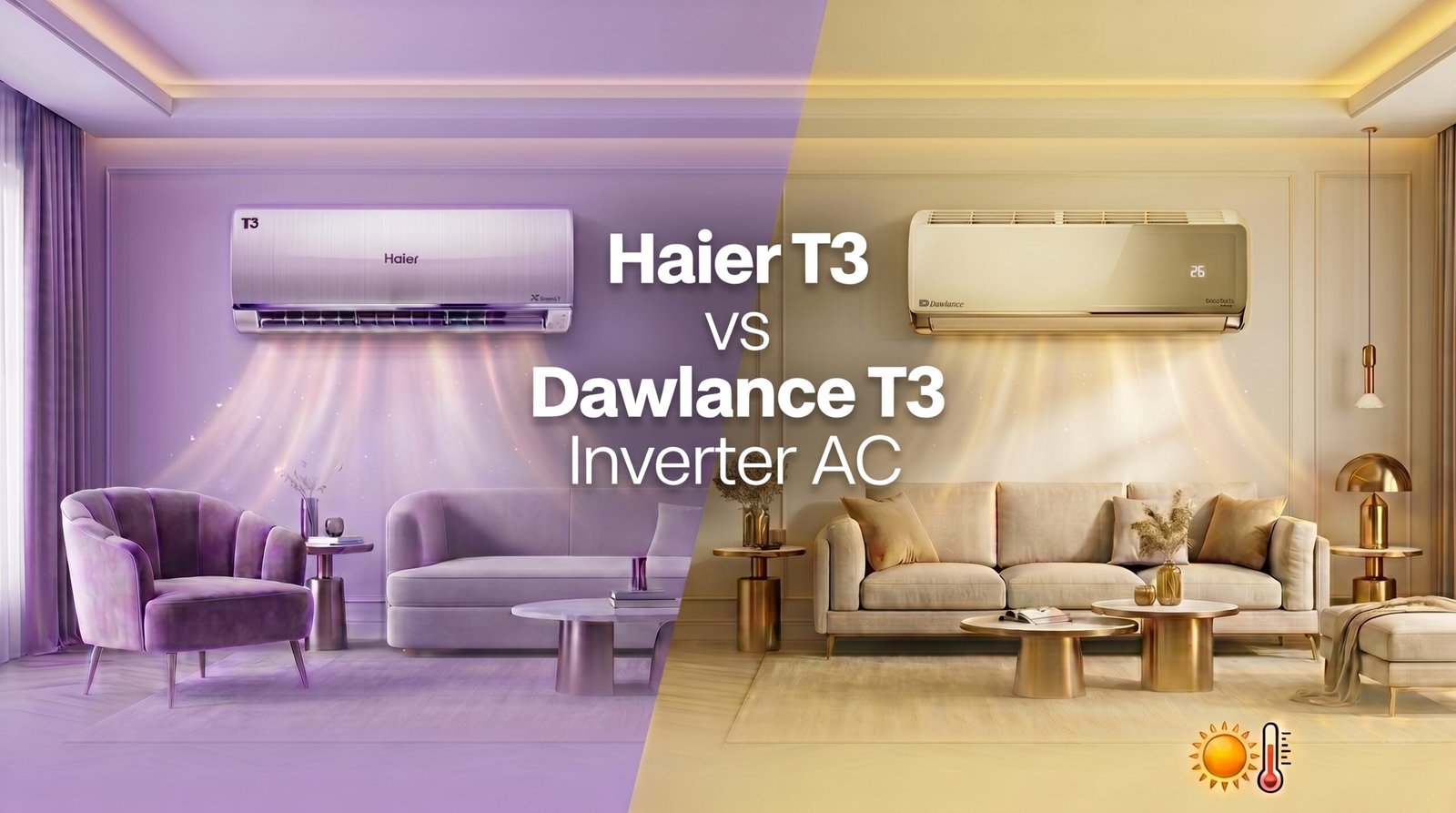
For example, 1.5 Ton AC models from brands such as Haier, Dawlance, Gree, Orient, Midea, TCL, PEL, Kenwood, and other brands available in Pakistan can have different electricity consumption.
Therefore, consumers should compare specific models rather than selecting an AC solely because of its brand.
What Should You Look for When Buying a 1.5 Ton AC in Pakistan?
Buying an AC is a long-term decision, so it is important to consider more than just the price.
Correct Cooling Capacity
Make sure the AC is suitable for the room and its cooling requirements.
Inverter Technology
If you use the AC for several hours every day, an inverter model can be a practical choice for better energy efficiency.
Energy Efficiency
Look at the manufacturer’s official energy-efficiency information rather than relying only on promotional claims.
High Ambient Performance
Pakistan’s summer heat can be extreme, so high-temperature cooling performance is an important consideration.
Compressor Technology
The compressor is one of the most important components of an AC. Compare the technology and specifications before purchasing.
Smart Features
Modern ACs may include Wi-Fi control, mobile apps, sleep mode, Eco mode, turbo cooling, self-cleaning, air purification, and other features.
Choose features that are genuinely useful for your household.
Warranty
Always check the compressor warranty and complete-unit warranty before purchasing.
Long-Term Running Cost
Do not consider only the initial purchase price.
An AC with a lower purchase price but higher electricity consumption may cost more over the long term.
How to Find the Most Energy-Efficient 1.5 Ton AC?
When looking for an energy-efficient 1.5 Ton AC, do not rely only on terms such as “energy saving” or “inverter.”
Look at the actual technical specifications.
Important things to compare include:
- Energy efficiency
- Power consumption
- Cooling capacity
- Compressor technology
- Operating temperature range
- High ambient performance
- Energy-saving modes
- Warranty
It is also useful to compare several models before making your final decision.
Whether you are looking for a budget-friendly model or a feature-rich inverter AC, comparing different products can help you make a more informed decision.
Why Your AC Electricity Bill May Be Higher Than Expected
Many people calculate their AC consumption and then wonder why their actual electricity bill is higher.
One important reason is that the AC is not the only appliance consuming electricity.
A typical Pakistani household may also use:
- Refrigerator
- Freezer
- Fans
- Lights
- Washing machine
- Water pump
- Television
- Computer
- Microwave oven
- Iron
- Water heater
- Kitchen appliances
All of these appliances contribute to total household electricity consumption.
Therefore, your monthly electricity bill represents the combined electricity usage of your home.
During summer, the AC can become one of the biggest contributors, especially when it operates for several hours every day.
How Can You Check the Actual Electricity Consumption of Your AC?
If you want to know how much electricity your specific AC is consuming, monitoring your electricity meter can provide useful information.
You can note your meter reading before and after operating the AC for a certain period. However, remember that other appliances operating during the same period will also affect the reading.
For more accurate appliance-level monitoring, an appropriately rated energy monitoring device can be used.
Actual measurements can be more useful than general estimates because every AC operates differently depending on its model, room, weather conditions, temperature setting, and maintenance.
Is a 1.5 Ton AC Expensive to Run in Pakistan?
A 1.5 Ton AC can become one of the largest electricity-consuming appliances in a household when it is operated for long periods.
However, the actual running cost depends on several factors.
These include:
- AC efficiency
- Daily usage
- Temperature setting
- Outdoor temperature
- Room insulation
- Maintenance
- Electricity tariff
- Compressor technology
An efficient inverter AC can have significantly different running costs compared with an older conventional AC.
This is why buyers should consider the long-term cost of ownership rather than focusing only on the initial purchase price.
1.5 Ton AC Buying Guide for Pakistani Summers
Pakistan’s summers can be extremely challenging, which makes choosing the right AC particularly important.
If you are buying a 1.5 Ton AC for your home or office, start by considering the size and conditions of the room.
Next, decide whether you need an inverter model.
If the AC will be used for many hours every day, an inverter AC can be a better long-term choice because it can adjust compressor speed according to cooling demand.
You should also consider whether you need T3 or high-ambient performance, particularly if you live in an area where temperatures become extremely high.
Energy efficiency should also be a major consideration.
Instead of selecting the cheapest available model, compare the long-term running cost, warranty, compressor technology, cooling performance, and energy efficiency.
Finally, consider the features you actually need.
Wi-Fi control, smart modes, sleep mode, Eco mode, turbo cooling, and other features can make an AC more convenient, but the basic cooling performance and efficiency should remain your priority.
Final Verdict: How Much Electricity Does a 1.5 Ton AC Use in Pakistan?
So, how much electricity does a 1.5 Ton AC use in Pakistan?
There is no single fixed answer.
The electricity consumption of a 1.5 Ton AC depends on the specific model, compressor technology, energy efficiency, room size, outdoor temperature, temperature setting, insulation, maintenance, and daily usage.
An inverter AC can adjust its compressor speed according to the cooling requirement. This means it may use more power when the room needs rapid cooling and less power after the desired temperature has been reached.
A conventional non-inverter AC generally operates using a fixed-speed compressor that switches ON and OFF.
For households that use an AC for several hours every day, an efficient 1.5 Ton inverter AC can be a smart choice.
However, simply buying an inverter AC is not enough to guarantee a low electricity bill.
You should also use a reasonable temperature setting, keep your filters clean, maintain the outdoor unit, reduce direct sunlight, keep doors and windows closed, and make sure the room has suitable insulation.
When buying a new AC, compare more than just the price.
Consider energy efficiency, cooling capacity, inverter technology, high ambient performance, compressor technology, features, warranty, and expected long-term electricity consumption.
KiaChahiye.com offers products for customers across Pakistan, so you can explore available AC options and choose a model that fits your cooling needs.
Frequently Asked Questions (FAQs)
Q1. How many units does a 1.5 Ton AC use per hour? +
The electricity consumption of a 1.5 Ton AC depends on the model and operating conditions. Inverter ACs can adjust compressor speed, so their electricity consumption can change throughout the cooling cycle.
Q2. How many units does a 1.5 Ton inverter AC use in 8 hours? +
There is no fixed number because inverter ACs do not necessarily operate at the same power level throughout the entire period. Consumption depends on the model, room temperature, outdoor weather, temperature setting, and cooling requirement.
Q3. How much electricity does a 1.5 Ton AC use per month? +
Monthly electricity consumption depends on how many hours the AC operates every day, its efficiency, and the surrounding conditions. Longer daily usage generally results in higher monthly electricity consumption.
Q4. Is a 1.5 Ton inverter AC better than a non-inverter AC? +
For households that use their AC for several hours every day, an efficient inverter AC can provide better energy efficiency and more consistent cooling compared with a conventional fixed-speed AC.
Q5. Does a 1.5 Ton AC consume 1.5 units per hour? +
No. The 1.5 Ton rating represents the cooling capacity of the AC, not its electricity consumption. Actual electricity usage depends on the AC's power requirements and operating conditions.
Q6. What temperature is best for saving electricity with a 1.5 Ton AC? +
A temperature around 24°C to 26°C can provide a good balance between comfort and energy consumption for many users. Extremely low temperature settings can increase the cooling workload.
Q7. Does T3 AC consume less electricity? +
Not necessarily. T3 technology is mainly associated with high-ambient operating performance. Electricity consumption depends on the specific AC model, its efficiency, compressor technology, and operating conditions.
Q8. Why does my 1.5 Ton AC consume more electricity in summer? +
Very high outdoor temperatures can make the compressor work harder. Poor insulation, direct sunlight, dirty filters, low temperature settings, and frequent door opening can also increase electricity consumption.
Q9. Can a ceiling fan reduce AC electricity consumption? +
A ceiling fan can improve air circulation and may allow you to keep the AC at a slightly higher temperature. This can potentially reduce AC electricity consumption, although the fan itself also uses electricity.
Q10. How can I reduce the electricity bill of my 1.5 Ton AC? +
Use an energy-efficient inverter AC, maintain a moderate temperature, clean the filters regularly, keep doors and windows closed, reduce direct sunlight, maintain the outdoor unit, and avoid unnecessary AC operation. You can also compare energy-efficient AC models on KiaChahiye.com before purchasing.