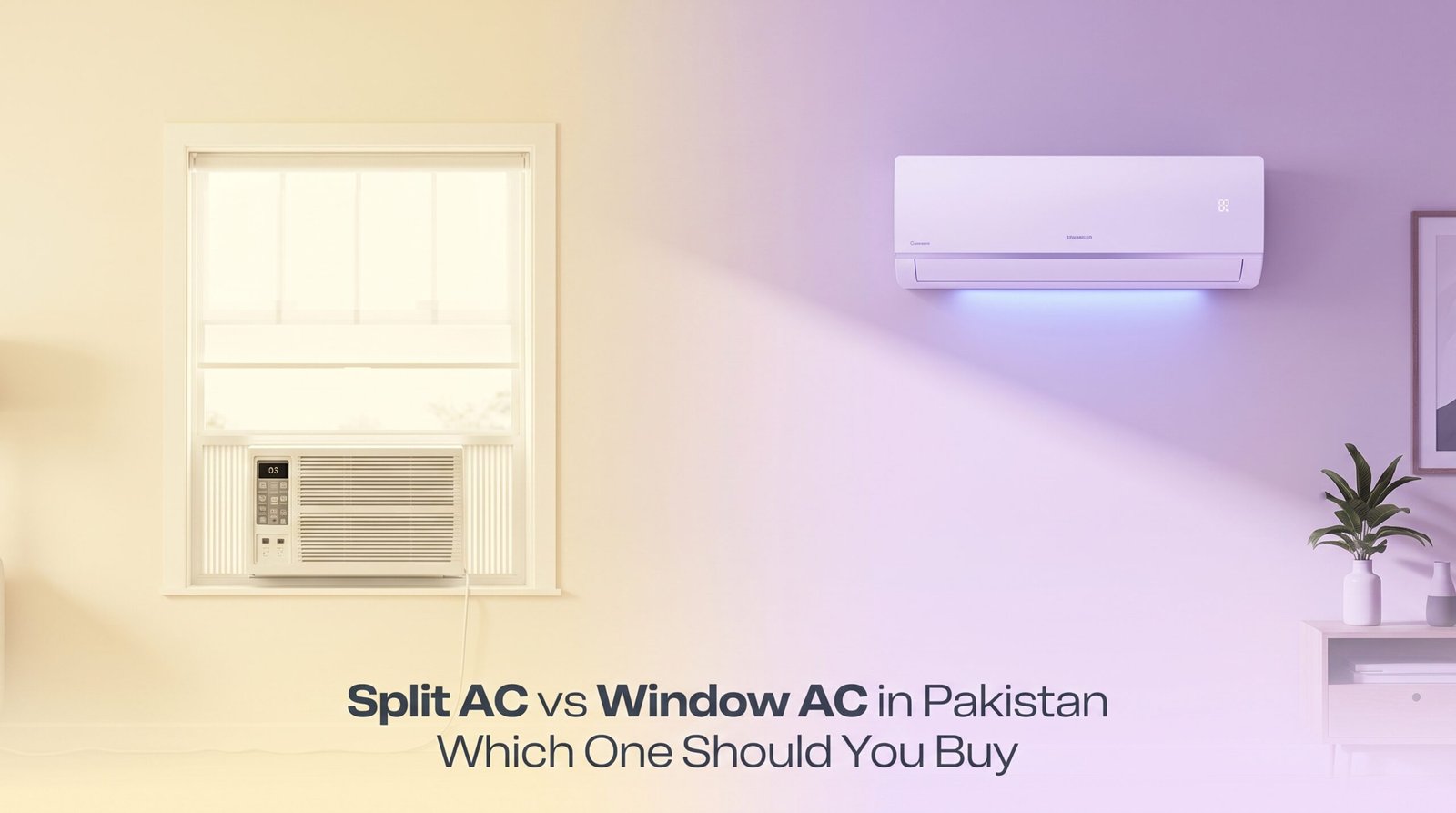
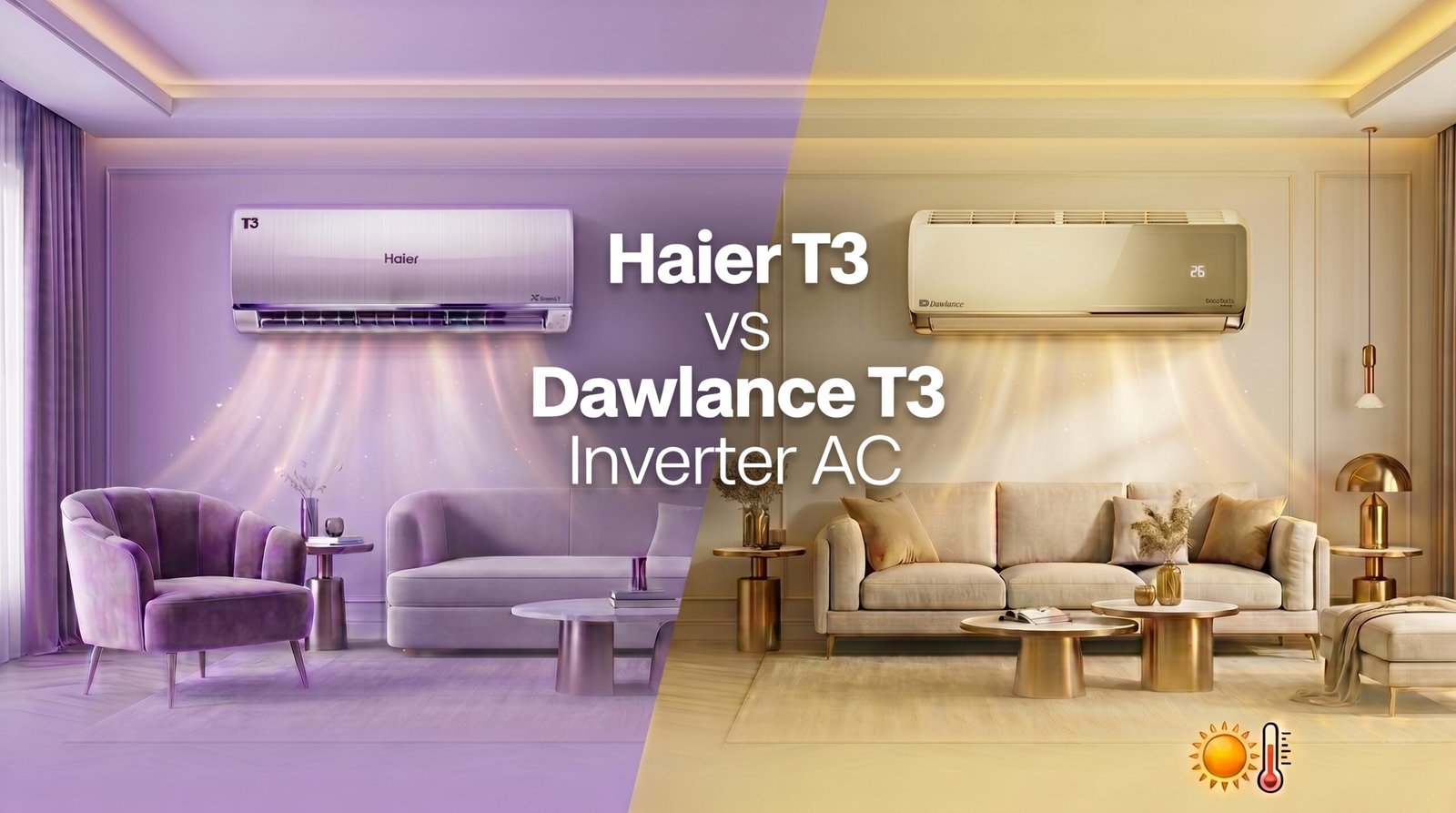
As summer temperatures break records across Pakistan, buying a new air conditioner becomes an urgent necessity. However, walking into the electronics market or browsing online leaves most buyers confused with one major question: “Inverter AC vs Non-Inverter AC Pakistan: which is truly better for long-term use?”
With skyrocketing electricity tariffs, high NEPRA taxes, and constant fuel adjustment charges, making the wrong appliance choice can heavily burden your monthly household budget. In this ultimate, data-driven buying guide by Kiachahiye.com, we will break down the hidden differences, technology, operational costs, and energy-saving potentials to help you find the best AC in Pakistan for your home.
Deep Dive: What is an Inverter AC and How Does It Work?
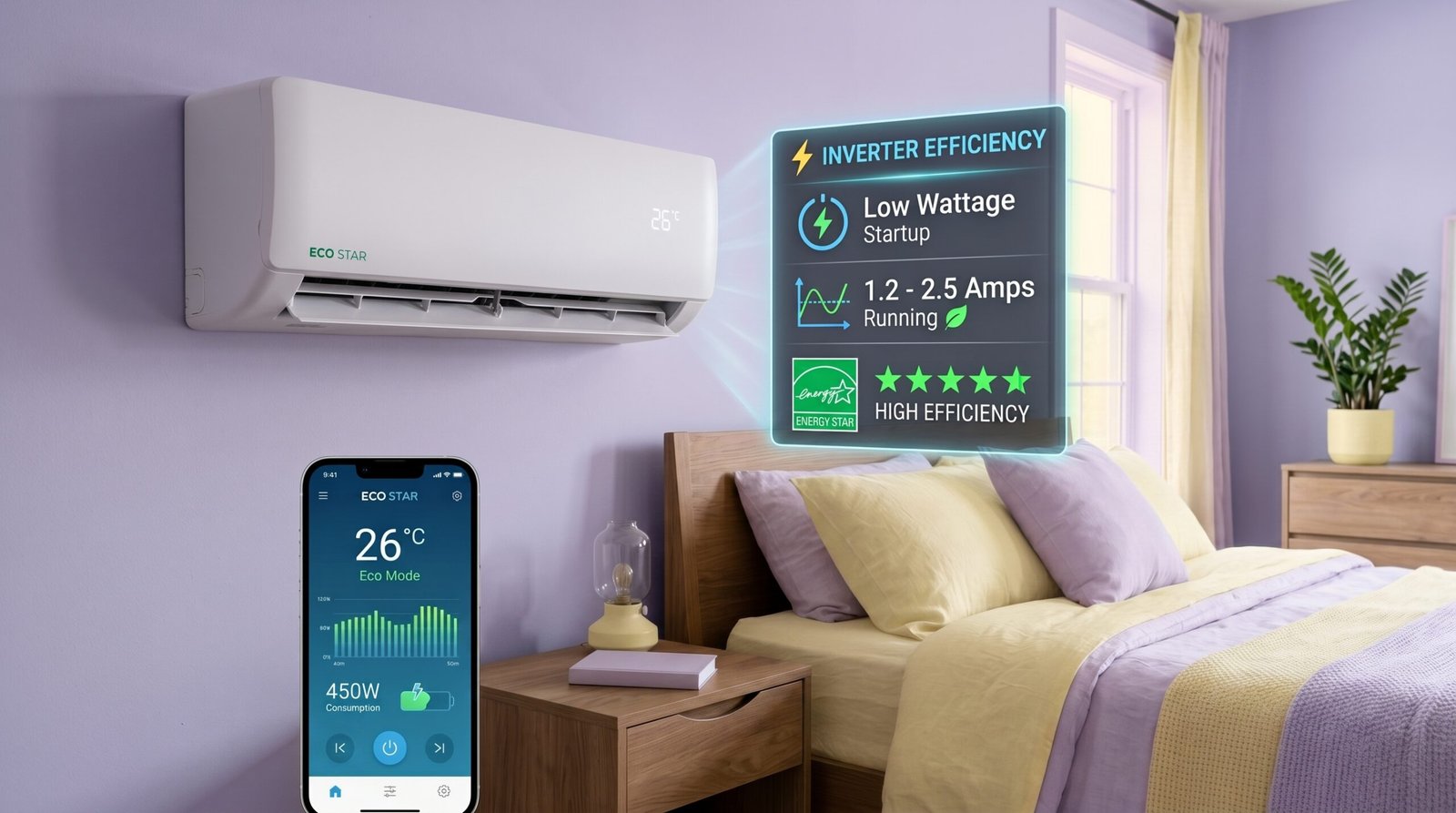
An inverter air conditioner utilizes advanced, variable-speed compressor technology. Unlike traditional models, when an inverter AC cools the room to your designated temperature setting (e.g., 26°C), the compressor does not shut down. Instead, the intelligent microchip drops the motor speed to a minimum level—just enough to maintain the cold air consistently.
Think of it like driving a car smoothly on a highway at a constant cruise control speed without constantly slamming on the brakes and accelerating from zero.
Core Benefits of buying an Inverter AC in Pakistan:
- Massive Energy Efficiency: Eliminates the massive power surges that happen when a traditional compressor starts up, leading to low electricity bills.
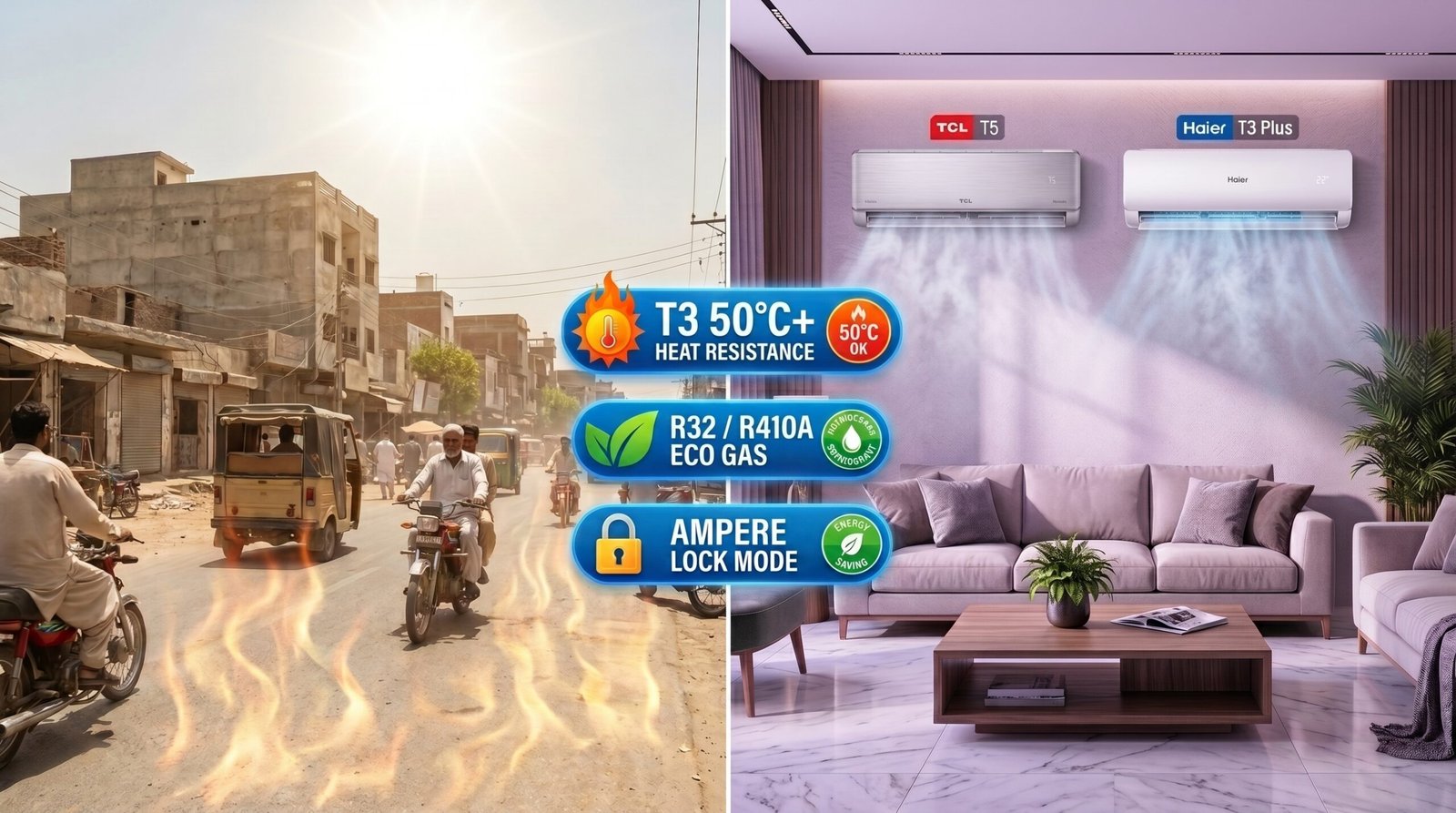
- T3 Compressor Technology: Most best inverter AC 2026 models feature T3 heavy-duty compressors that ensure uninterrupted cooling performance even when ambient temperatures hit a scorching 50°C in cities like Sibi, Multan, or Jacobabad.
- Low-Voltage Operation: Modern brands offer stabilizer-free operation, meaning the AC can run efficiently even on voltages as low as 140V to 150V.
- Eco-Friendly Refrigerant: Built using R32 or R410a gas, which offers better heat retention and minimal environmental impact.
Top Selling Inverter AC Brands on Kiachahiye.com: Haier Digital Inverter, Gree Fairy Series, Dawlance Chrome, Kenwood EcoPlus, and Orient Inverter AC.
Understanding Traditional Non-Inverter AC Technology
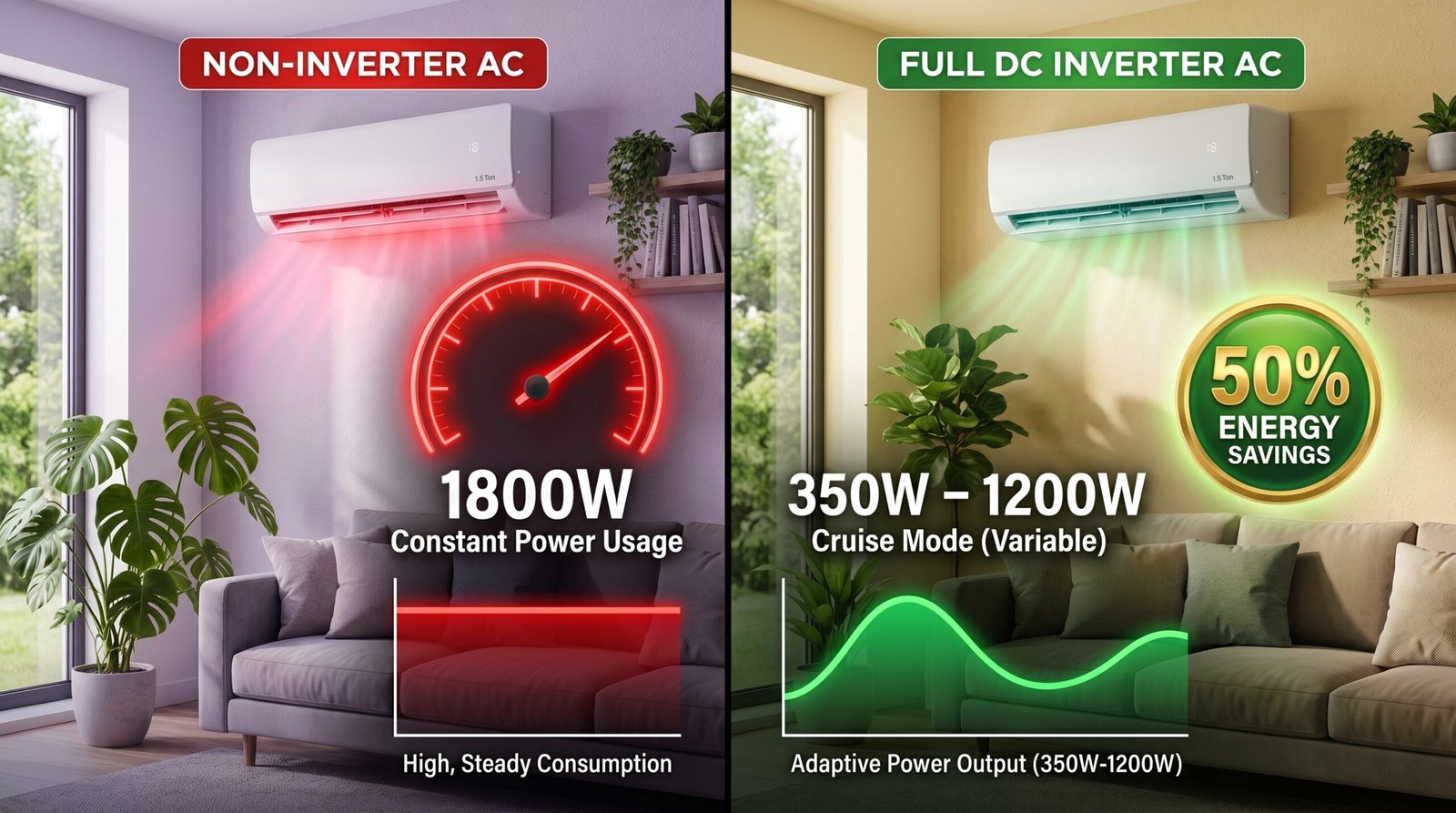
A non-inverter AC uses traditional fixed-speed technology. The compressor operates on an “All or Nothing” principle. When turned on, it runs at 100% capacity, consuming maximum electrical power until the room reaches the desired temperature, and then it shuts off entirely. As soon as the room warms up by a few degrees, the compressor restarts at full power.
This constant ON/OFF cycle requires a massive amount of initial electrical current (starting amperes), which drives your digital electricity meter crazy.
Benefits of a Non-Inverter AC:
- Lower Initial Purchasing Cost: The upfront air conditioner price in Pakistan for non-inverter models is considerably lower, making it attractive for budget buyers.
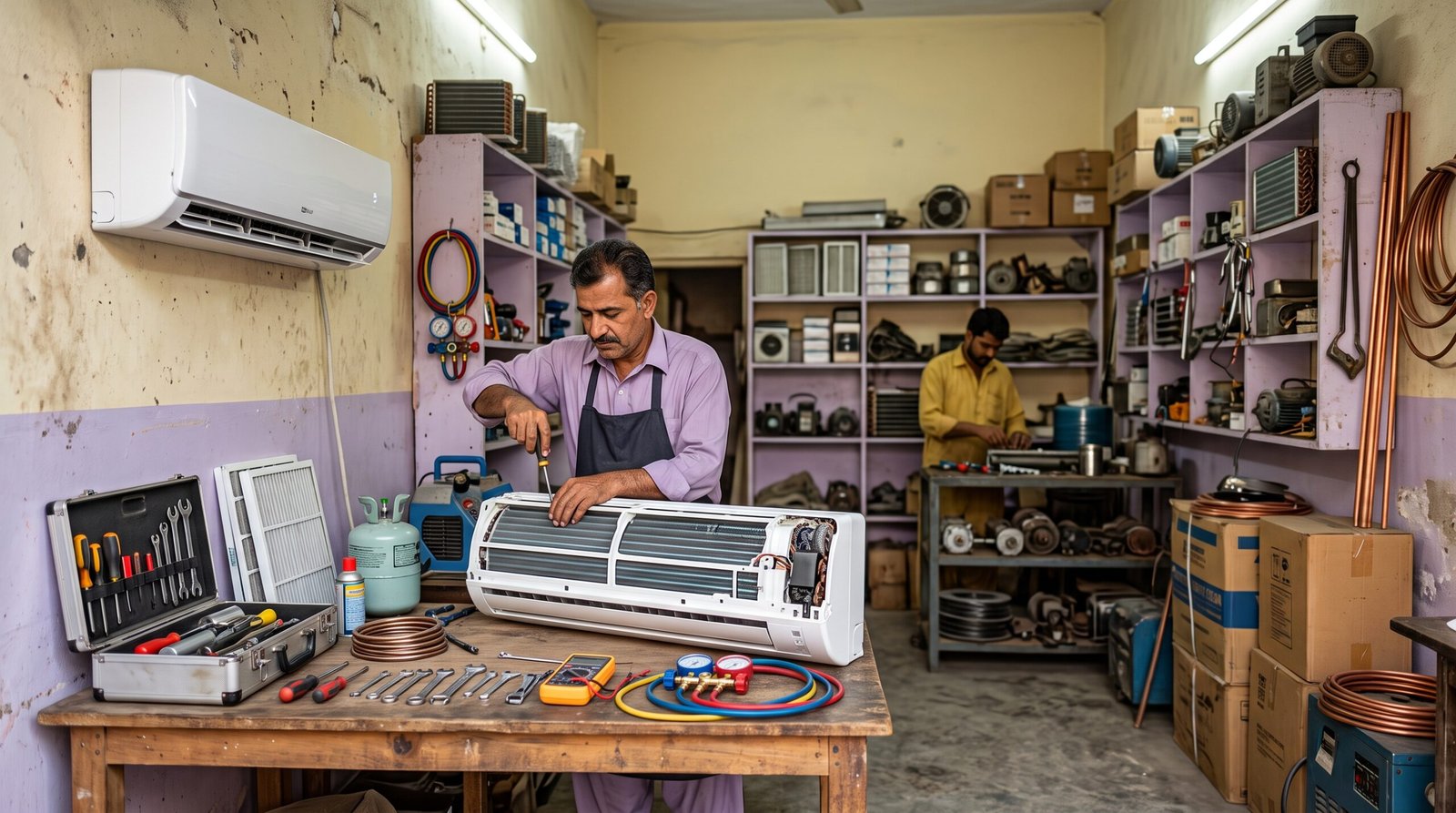
- Cheaper and Simpler Repairs: Since it lacks complex electronic printed circuit boards (PCBs), local technicians can easily fix compressor or wiring issues at minimal rates.
- Durability in Extreme Voltage Fluctuations: Traditional machinery can sometimes handle rough electrical grids better without frying sensitive electronic components.
Serious Drawbacks for Pakistani Users:
- Exorbitant monthly electricity bills due to inefficient power management.
- Noticeable temperature fluctuations (the room feels too cold, then suddenly too warm).
- Noisy operation as the compressor loudly clicks back to life every few minutes.
Detailed Comparison – Inverter AC vs Non-Inverter AC
1. Cooling Efficiency in Extreme Weather Conditions
Pakistan’s summer heatwaves are notoriously brutal. Inverter ACs excel during peak summer because they can temporarily run beyond their rated capacity (e.g., a 1.5 Ton Inverter AC can ramp up its cooling output initially to pull down the temperature rapidly).
Non-inverter ACs lack this smart flexibility. On a typical 46°C afternoon in Lahore or Faisalabad, a non-inverter AC compressor might trip due to excessive thermal load, resulting in poor cooling and sweaty rooms.
2. Electricity Bill Impact (The Real Monthly Calculation)
With escalating electricity unit rates in Pakistan, energy conservation is no longer a luxury—it is a survival mechanism. Let’s look at a realistic monthly power consumption breakdown based on a standard 1.5 Ton AC running for 8 hours daily:
- Non-Inverter AC (Fixed Speed): Consumes roughly 1.5 to 1.8 units of electricity per hour. Over a month, this equals approximately 360 to 440 units. At a commercial/residential slab rate of Rs. 48 per unit, your estimated monthly bill will range between Rs. 17,280 – Rs. 21,120.
- Inverter AC (Variable Speed): Consumes around 1.2 units in the first hour and then drops down to just 0.4 to 0.6 units per hour once the room is cooled. Over a month, it consumes roughly 150 to 200 units. At the same Rs. 48 per unit rate, your monthly bill will drop to just Rs. 7,200 – Rs. 9,600.
As analyzed by the home appliance experts at Kiachahiye.com, switching to an inverter model saves you over Rs. 10,000 per month. Therefore, the higher inverter AC price in Pakistan pays for itself within just 4 to 5 months of usage!
3. Home Solar System Compatibility
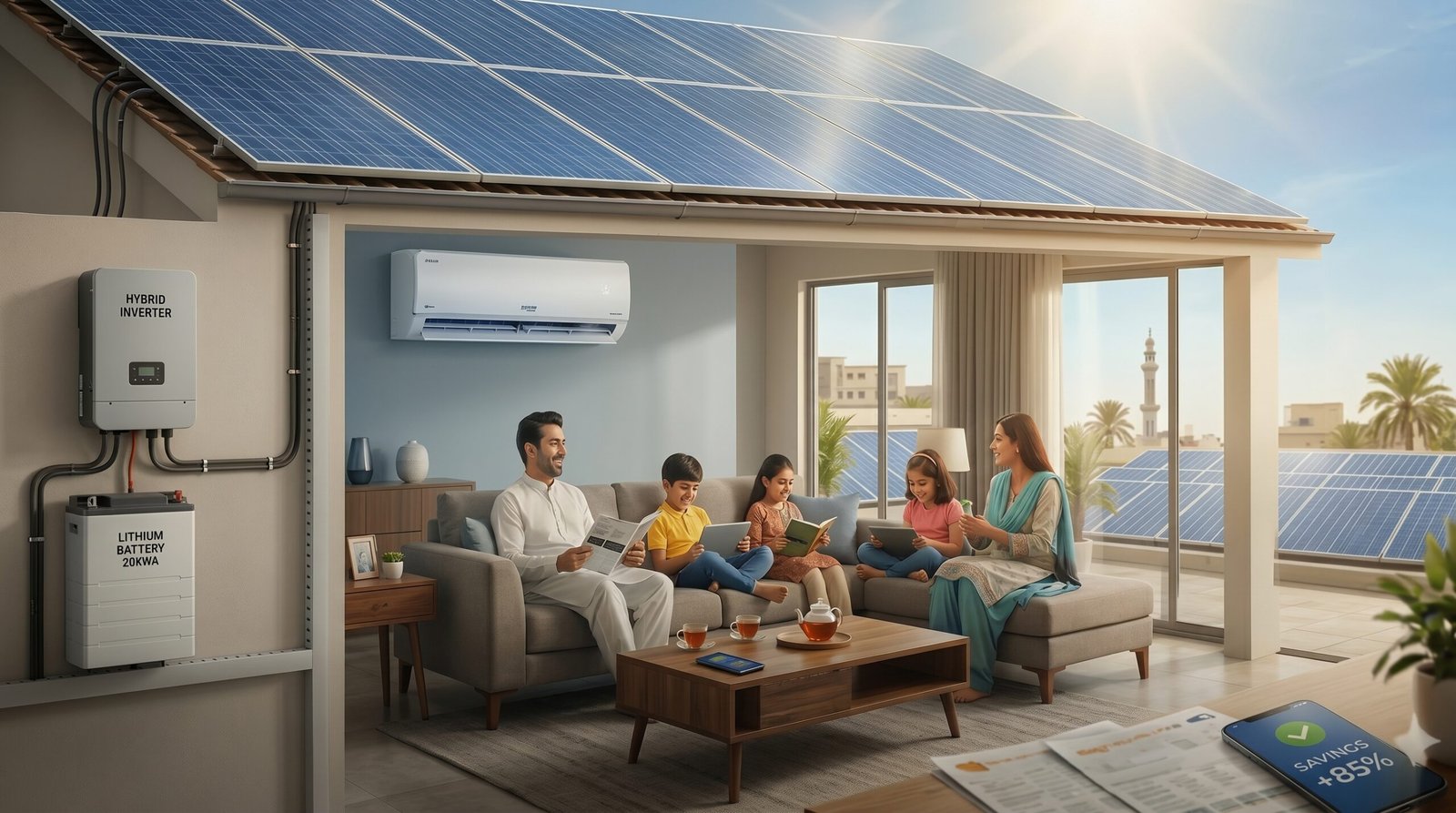
With thousands of Pakistani homeowners shifting to solar panels, appliance compatibility is crucial. An inverter AC is highly recommended for solar systems because of its low starting current. A 1 Ton inverter AC or 1.5 Ton inverter AC can easily run on a modest 3kW or 5kW solar setup during the day without overloading the solar inverter. Running a non-inverter AC on solar requires heavy, expensive solar setups to sustain the initial startup power spikes.
Which One Should You Buy for Your Home?
Choose an Inverter AC if:
- You intend to use the air conditioner for more than 4 hours everyday throughout the summer.
- Your primary goal is electricity bill reduction and energy optimization.
- You are installing it in a master bedroom or a home office where silent operation and exact temperature control are required.
- You want a long-term appliance investment with a 10-year compressor warranty.
Choose a Non-Inverter AC if:
- Your immediate purchasing budget is highly restricted.
- The AC is intended for an occasionally used space, such as a guest drawing room or a seasonal dining hall (less than 2 hours of daily use).
- You live in a rental property with an unstable electrical supply and plan to move frequently.
Best AC Size Guide for Pakistani Rooms
To get maximum cooling efficiency and avoid overloading your appliance, matching the right tonnage to your room size is crucial:
- 1 Ton Inverter AC: Ideal for small bedrooms or study rooms up to 100 – 120 sq. ft.
- 1.5 Ton Inverter AC: The standard size for medium-sized living rooms or master bedrooms up to 150 – 200 sq. ft.
- 2 Ton Inverter AC: Perfect for large open lounges, commercial shops, or top-floor rooms that face direct sunlight all day long.
Conclusion:
When comparing Inverter AC vs Non-Inverter AC in 2026, the winner is clear for the vast majority of Pakistani consumers. With current electricity rates, running a non-inverter AC on a daily basis will result in unmanageably high bills. Investing the extra upfront money into a Full Inverter AC is the smartest financial decision you can make for your household.
Before heading out to the market, make sure to read more curated product recommendations, brand head-to-head comparisons, and real-user reviews on Kiachahiye.com to ensure you invest your hard-earned money in the absolute best appliance for your family!