







Gree vs Kenwood AC 2026 Price and Guide in Pakistan

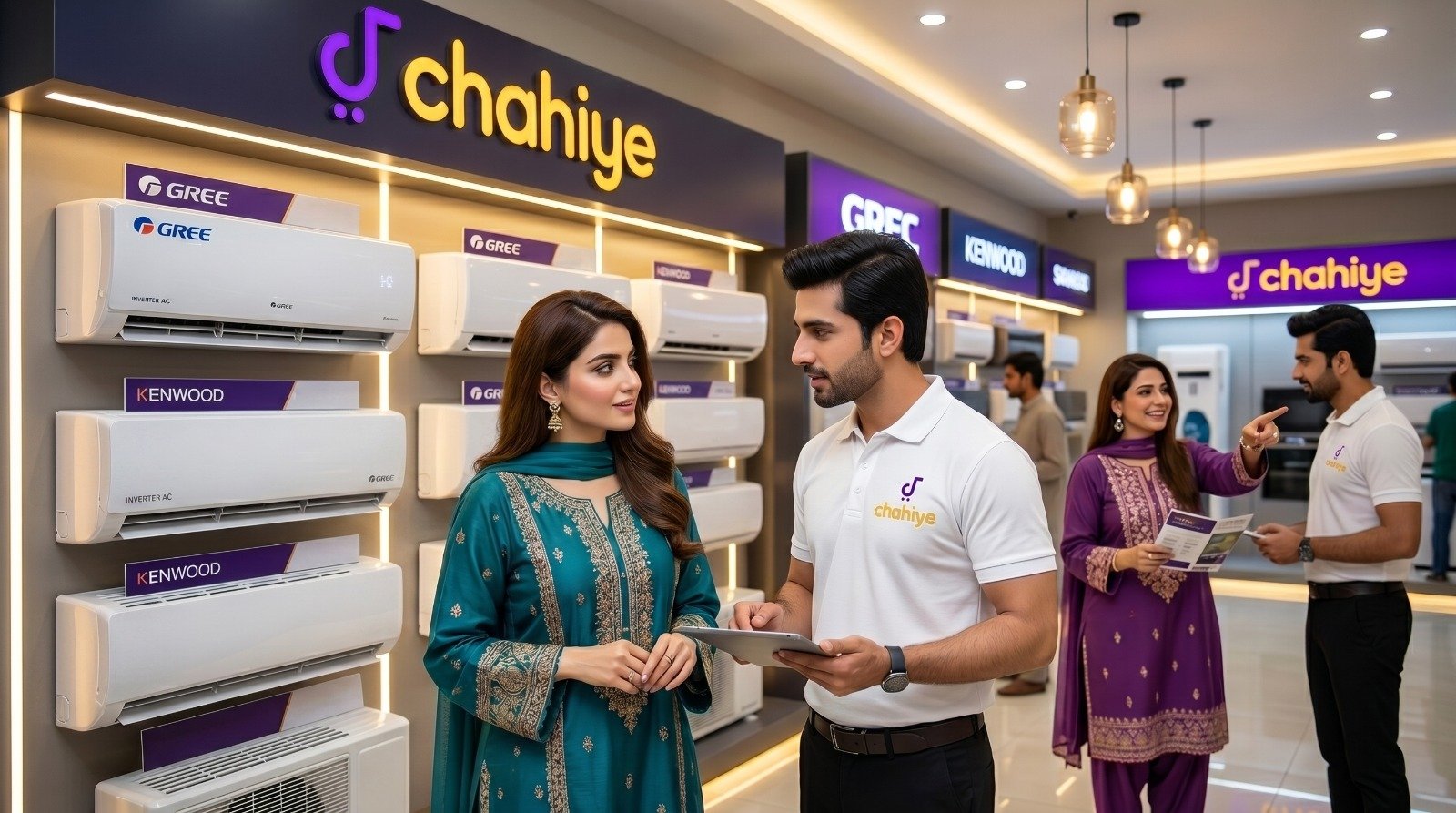
Which Inverter AC Should You Buy in Pakistan?
As electricity tariffs climb and summer temperatures routinely shatter records across Pakistan, buying a traditional fixed-speed air conditioner is no longer a viable option. Modern households are rapidly switching to DC inverter ACs to beat the intense summer heatwaves without burning a massive hole in their pockets.
Among the top-tier best air conditioner brands in Pakistan, Gree and Kenwood stand out as the ultimate marketplace competitors. Both brands offer advanced heavy-duty cooling, energy-saving mechanisms, low-voltage startup operations, and reversible (Heat & Cool) technology. But when it comes to the final purchase decision, which one truly deserves your hard-earned money?
To give you the most accurate, real-world breakdown, we at kiachahiye.com Pakistan’s leading product review and comparison platform have analyzed the deep technical specifications, real-time user feedback, and current market pricing data. This comprehensive showdown breaks down Gree and Kenwood across cooling power, seasonal electricity savings, smart features, variant pricing, and localized after-sales support to help you make the absolute right choice for your home or office.
At a Glance: Gree vs Kenwood Comparison Table
Feature | Gree Inverter AC | Kenwood Inverter AC |
Price Range (PKR) | Rs. 124,500 – Rs. 585,000 | Rs. 106,000 – Rs. 400,000 |
Cooling Performance | Exceptional / Heavy-Duty (Up to 68°C) | Very Good / Stable & Reliable (Up to 60°C) |
Energy Efficiency | High (SEER Optimized) | High (Ampere Locking & Smart Eco Modes) |
T3 Compressor Tech | Highly Prevalent & Proven | Available in Select Premium Series |
Smart / Wi-Fi Features | Standard / Available in Premium Models | Advanced / Industry-Leading IoT Integration |
Heat & Cool Function | Yes (Reversible Tech) | Yes (Reversible Tech) |
Voltage Operation | Ultra-Wide (130V – 275V) | Wide Range (120V – 270V) |
Best For | Extreme geographical heat & long-term durability | Tech-savvy features & high budget value |
Why Inverter ACs are Essential in Pakistan
With many Pakistani cities like Jacobabad, Sibi, Multan, and Lahore crossing the blistering mark in peak summer, air conditioning is no longer a luxury it is an absolute necessity. However, with NEPRA’s constantly rising electricity tariffs and fuel adjustment charges, running a conventional non-inverter AC can easily lead to astronomical utility bills that disrupt your monthly budget.
Unlike conventional fixed-speed air conditioners that constantly switch their compressors completely on and off (consuming massive startup current every single time), DC inverter technology continuously modulates and adjusts the compressor’s operational speed. By maintaining a steady room temperature without abrupt shutdowns, the latest 1.5 Ton inverter AC models can effectively reduce your power consumption by up to 30% to 50% under standard conditions, and even higher if your room insulation is tightly optimized.
Brand Spotlights
1. Gree Inverter ACs
Gree is an undisputed global heavyweight in climate control technology, earning a stellar, decades-long reputation in Pakistan for its rugged build quality and relentless cooling. They utilize heavy-duty materials, making them a household favorite across provinces.
- Key Engineering Features: Low-voltage startup, robust T3 climate compressors, rapid turbo cooling, fireproof PCB boxes, and auto-self-cleaning (i-Clean) tech.
- Top Recommended Models in Pakistan:
2. Kenwood Inverter ACs
Kenwood successfully targets the modern, tech-focused Pakistani consumer by perfectly blending premium, smart IoT features with highly competitive and accessible pricing structures.
- Key Engineering Features: Advanced Wi-Fi smart app integration, real-time power monitoring, multi-stage Ampere Locking systems (50%, 75%, 100%), and sleek, modern indoor unit designs.
- Top Recommended Models in Pakistan:
Head-to-Head Evaluation
1. Cooling Performance in Extreme Heat
When the outdoor temperature hits a grueling in the middle of June, you need an air conditioner whose compressor doesn’t constantly trip. Both brands utilize heavy-duty T3 compressors specifically designed for tropical climates like Pakistan.
However, Gree holds a distinct edge here. Its outdoor units are heavily engineered to handle severe, localized heatwaves, delivering faster ambient cooling even in poorly insulated rooms or top-floor bedrooms exposed to direct sunlight. Kenwood performs wonderfully in standard hot conditions, but under absolute peak summer duress, Gree’s G-Boost compressor technology is famously hard to beat.
- Winner: Gree
2. Electricity Consumption & Savings
A standard 1.5-ton inverter AC in Pakistan generally pulls between 0.8 kW and 1.8 kW per hour depending on variable factors like room size, outdoor temperature, and thermal insulation. Both brands utilize highly intelligent microchips to lower power consumption once the target temperature is met.
While Kenwood actively markets aggressive energy-saving percentages (claiming up to 75% savings in specific eco-modes) and features built-in power-monitoring apps, data tracking at kiachahiye.com shows that the actual real-world difference on your monthly bill between equivalent Gree and Kenwood units is negligible. Kenwood’s Ampere Locking System is highly useful if you want to run your AC on a home solar inverter system or a generator.
- Winner: Tie
3. Smart Features & Technology
If you love a smart home ecosystem, this is where the scale tips drastically. Kenwood shines brightly by offering robust IoT features, sleek smartphone app control, and advanced energy tracking tools on a wider range of mid-tier models. You can easily track exactly how many units your AC has consumed today.
Gree offers smart Wi-Fi features as well, but they are typically reserved for their highest-end, premium lineups (like the Fairy or Airy series), which cost significantly more.
- Winner: Kenwood
4. Market Pricing in Pakistan
Budget is usually the final deciding factor for Pakistani households trying to manage inflation.
- Gree 1.5 Ton Price Range: Rs. 149,500 – Rs. 244,000
- Kenwood 1.5 Ton Price Range: Rs. 128,000 – Rs. 220,000
Gree demands a premium price tag across all capacities because of its premium brand position. Kenwood, conversely, provides nearly identical cooling capacities at a noticeably lower price point, offering superior value for money for the budget-conscious buyer.
- Winner: Kenwood
5. After-Sales Service & Parts Availability
Both companies have established extensive authorized service networks across major urban hubs like Karachi, Lahore, Islamabad, Faisalabad, Peshawar, and Multan.
Gree has been a dominant market leader in Pakistan for a much longer period, meaning spare parts (such as replacement PCBs, fan motors, sensors, and remotes) are incredibly easy to source through local third-party vendors and authorized dealers alike. Kenwood’s network is vast and reliable, but sourcing specific older model components can occasionally take slightly longer depending on your city.
- Winner: Gree
Detailed Pros and Cons
Gree AC
- Pros:
- Phenomenal cooling reliability in extreme $50^\circ\text{C}+$ weather.
- Excellent long-term hardware durability and strong market resale value.
- Readily available spare parts across almost every city in Pakistan.
- Cons:
- Higher initial purchasing cost.
- Smart Wi-Fi features are locked behind premium, expensive price tiers.
Kenwood AC
- Pros:
- Exceptional value for money with budget-friendly price tags.
- Feature-packed with superior Wi-Fi apps and Ampere Locking mechanisms.
- Modern, aesthetically pleasing indoor unit designs that look premium.
- Cons:
- Peak cooling speed is slightly lower than Gree in extreme, open-sun conditions.
- Long-term hardware ruggedness is still chasing Gree’s legacy.
Final Verdict: Which One Should You Buy?
Both Gree and Kenwood are exceptional choices for Pakistani households, but your final choice boils down to your specific environment and budget.
- Buy a Gree Inverter AC if: Money is no object and you prioritize raw, uncompromised cooling performance, heavy-duty build quality, long-term durability, and maximum peace of mind during punishing desert heatwaves.
- Buy a Kenwood Inverter AC if: You want a modern, feature-rich smart AC that looks premium, integrates perfectly with your smartphone, manages power limits smoothly via Ampere Locking, and offers the absolute best value for a moderate budget.
Make an Informed Decision with kiachahiye.com
Still confused about which specific model matches your exact room layout and budget? At kiachahiye.com, we simplify your shopping journey. We offer deep-dive technical specs, live market price updates, and verified user reviews for all major home appliances in Pakistan. Before you spend your money, head over to kiachahiye.com to compare the latest AC models side-by-side and find exactly what you need!
Frequently Asked Questions (FAQs)
Q1: Which AC is better for extreme summer heat (above 45°C) in Pakistan, Gree or Kenwood? +
Ans: If you live in regions experiencing intense heatwaves—such as interior Sindh, Southern Punjab, or top floors in Karachi and Lahore—Gree is generally the superior choice. Gree models are heavily engineered with robust T3 compressors that can sustain fast, heavy-duty cooling even when outdoor ambient temperatures touch $50^\circ\text{C}$. While Kenwood’s T3 series performs reliably, Gree has a slight edge in raw cooling speed under extreme duress.
Q2: Does Kenwood really save more electricity than Gree? +
Yes, you can edit questions, answers and coloraAns: On paper, Kenwood offers advanced marketing around its Eco-modes (like the E-Smart series claiming up to 75% savings) and includes excellent built-in mobile app power tracking. However, real-world data tracking at kiachahiye.com indicates that once a room is properly cooled and insulated, the actual difference in monthly electricity units between comparable Gree and Kenwood DC inverter models is negligible. Both brands will drastically reduce your bills compared to non-inverter units.s.
Q3: Why are Kenwood inverter air conditioners cheaper than Gree? +
Ans: Gree operates as a premium global specialist dedicated primarily to HVAC (Heating, Ventilation, and Air Conditioning) technology, allowing them to charge a brand and durability premium in Pakistan. Kenwood positions itself as a high-value, tech-forward alternative, bundling competitive manufacturing with advanced smart features at a more accessible price point for budget-conscious buyers.
Q4: Is it easy to find spare parts for Kenwood and Gree ACs in Pakistan? +
Ans: Yes, but Gree holds a clear advantage here. Due to Gree's massive, decades-long footprint in the Pakistani market, components like indoor/outdoor PCB boards, fan motors, sensors, and remote controls are widely stocked by third-party local mechanics as well as authorized dealers. Kenwood parts are also widely available across major cities, though certain specific components for newer smart series models might require a short wait from their official service center.
Q5: What temperature should I set on my Gree or Kenwood inverter AC for maximum savings? +
Ans: According to engineering data, every degree you raise your thermostat above 22 saves roughly 6% of electricity. Combining a setting of 26 with a low ceiling fan speed helps circulate the air perfectly while keeping the inverter compressor running in its lowest power-consumption "cruise mode."
Q6: What is an Ampere Locking System in Kenwood ACs, and does Gree have it? +
Ans: Kenwood’s Ampere Locking System allows users to manually drop the maximum operating current of the AC (e.g., locking it at 4 Amps or 6 Amps) via their remote or smart app. This prevents the AC from pulling high current, making it ideal for running on solar systems or generators. Gree models feature "Power Gear Control" or similar energy modes in their premium variants (like Airy), but Kenwood provides more direct, user-friendly control across a broader range of models.
Q7: Can I run a 1.5 Ton Gree or Kenwood Inverter AC on a 3kW Solar System? +
Ans: Yes, you can run a 1.5 Ton inverter AC on a 3kW solar system, but Kenwood makes this process much safer due to its Ampere Locking feature. During startup or high-heat periods, a standard AC can pull over 7-8 Amps, which might overload a 3kW system if other appliances are running. By locking a Kenwood AC at 50% or 75% capacity, it limits the load, ensuring smooth operation without tripping your solar inverter.
Q8: What is the difference between a T1 compressor and a T3 compressor in Pakistani ACs? +
Ans: T1 compressors are designed for moderate climates and are rated to perform efficiently up to an outdoor temperature. In contrast, T3 compressors are specifically engineered for tropical, high-ambient regions and can operate smoothly without tripping even when outdoor temperatures hit. For long-term performance in Pakistan, always verify that your Gree or Kenwood model is equipped with a genuine T3 compressor.
Q9: Does the company warranty cover PCB damage caused by voltage fluctuations in Pakistan? +
Ans: Most top brands, including Gree and Kenwood, offer a dedicated 3 to 4-year warranty on the indoor/outdoor electronic PCB boards alongside a 10-year compressor warranty. However, official policies regarding damage caused by extreme external electrical surges or high-voltage fluctuations can vary. It is highly recommended to install a digital voltage stabilizer or surge protector with your inverter AC to safeguard the expensive PCB modules.
Q10: What is the ideal room size for a 1 Ton vs 1.5 Ton inverter air conditioner? +
Ans: As a general rule of thumb for Pakistani environmental conditions:
- 1.0 Ton AC: Ideal for small bedrooms, study rooms, or home offices up to 120 square feet.
- 1.5 Ton AC: Perfect for standard master bedrooms, living spaces, or medium-sized rooms ranging from 120 to 180 square feet.
- If your room faces direct sunlight from the roof or west-side walls, it is safer to upgrade the capacity to avoid putting excess strain on the compressor.
Q11: How often should I use the self-cleaning (i-Clean) feature on these ACs? +
Ans: You should run the self-cleaning or auto-clean feature once every two to three weeks during heavy summer usage. This process freezes moisture on the evaporator coils to trap dust particles, then melts it away and dries the internal unit to prevent the buildup of mold, bacteria, and foul odors. Regular use of this feature maintains optimal airflow and keeps your indoor air quality fresh.
Q12: Which brand offers a better looking indoor unit design (IDU) for modern drawing rooms? +
Ans: Kenwood generally takes the crown for aesthetic design. They offer unique design choices, including gloss finishes, sleek LED displays, and matte options (like the Onyx or Pura series) that blend elegantly with modern home interiors. Gree units focus heavily on durable, premium-grade plastics and traditional solid designs, though their high-end models like the Gree Airy have recently introduced ultra-slim, minimalist aesthetics to compete directly in looks.
Q13: Does running an inverter AC on low voltage (under 150V) damage the unit? +
Ans: Both Gree and Kenwood feature ultra-wide voltage startup technology, allowing them to safely start and operate at voltages as low as 130V to 140V without damaging internal hardware. The intelligent inverter system automatically optimizes the internal current flow to handle low-voltage inputs. However, continuous, extreme voltage drops can lower cooling efficiency, so a stabilizer remains a wise insurance policy for rural areas.
Q14: Why does my inverter AC stop blowing ice-cold air after reaching the set temperature? +
Ans: This is perfectly normal behavior for a DC inverter AC. Unlike an old fixed-speed AC that blows constant freezing air until it shuts off, an inverter AC slows its compressor down to a minimal speed once the room hits your target temperature. It maintains a steady, comfortable ambient temperature by circulating cool—rather than freezing—air, which consumes far less electricity.
Q15: What is the current expected lifespan of a Gree vs Kenwood inverter AC in Pakistan? +
Ans: With timely seasonal servicing, regular filter cleaning, and stable voltage conditions, a premium Gree inverter AC easily lasts between 8 to 12 years due to its robust heavy-duty build quality and anti-corrosive gold-fin coatings. A Kenwood inverter AC offers a reliable lifespan of roughly 6 to 10 years. The longevity of both brands depends heavily on the quality of the initial copper piping installation and avoiding refrigerant gas leaks.