







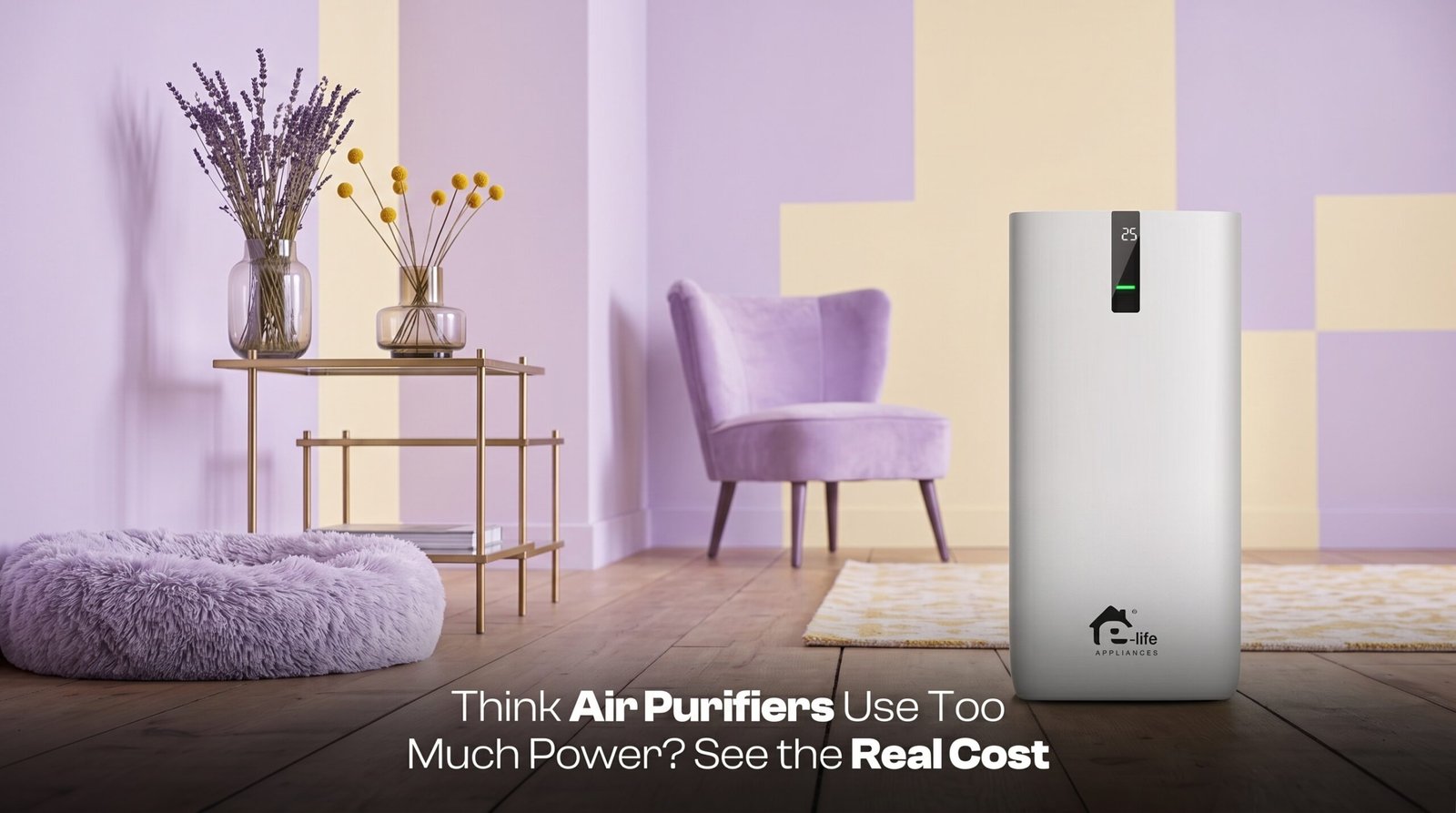
Think Air Purifiers Use Too Much Power?

The Real Cost of Air Purifiers in Pakistan at KiaChahiye.com
Clean air has officially become a premium luxury for families across Pakistan. With hazardous smog, toxic particulate matter (PM2.5), chemical emissions, and severe seasonal air pollution regularly blanketing major metropolitan hubs like Lahore, Karachi, Gujranwala, Faisalabad, Peshawar, Multan, and Islamabad, breathing clean indoor air is a massive challenge. In this alarming environmental crisis, investing in the best air purifier in Pakistan is no longer an optional luxury or a lifestyle choice—it has become an absolute health necessity to protect your family, children, and elderly parents from respiratory illnesses, chronic asthma, severe throat infections, and seasonal allergies.
Air Purifier Electricity Consumption in Pakistan: Complete Monthly Bill Guide
However, with the constantly rising electricity tariffs, skyrocketing per-unit rates, taxes, and heavy fuel adjustment charges (FAC) across Pakistan, many homeowners hesitate to make this purchase. While checking the latest air purifier prices in Pakistan is a great first step, understanding the long-term running cost and monthly electricity bill impact is what truly saves you from unexpected budget shocks.
If you are wondering which model fits your budget, which brand is the most durable, or where to find the best deals, detailed technical specs, and honest brand comparisons, kiachahiye.com is your ultimate destination. Let’s break down exactly how much electricity an air purifier uses, what key factors impact its power consumption, and how you can keep your indoor air pure without breaking the bank.
How Much Electricity Does an Air Purifier Really Consume?
The short, reassuring answer is: incredibly little. Most standard household air purifiers are highly optimized for energy efficiency and consume anywhere between 20W and 90W (Watts), depending entirely on the model size, coverage area, and active fan speed settings.
To put that into a clear perspective for Pakistani consumers who are worried about their meters spinning fast, an average room air purifier uses less power than almost every other electrical appliance running in your house.
What Does This Mean For Your Monthly Bill?
If you purchase a standard mid-sized air purifier for a typical bedroom or small living room, its electricity footprint is practically unnoticeable.
- Daily Usage (Running for 8 to 12 Hours): It consumes less than half an electricity unit (kWh) a day.
- Monthly Unit Consumption: If you run it daily for a whole month, it will only add roughly 7 to 20 units to your total electricity bill.
- Estimated Monthly Cost: Depending heavily on your current electricity provider (like LESCO, K-Electric, IESCO, or FESCO) and your current billing slab, this translates to an expense of around Rs. 250 to Rs. 750 per month.
The Reality Check: A premium quality air purifier consumes significantly less power than a standard copper-winding ceiling fan (which draws 65W–80W), an inverter refrigerator, or even an older LED TV. You can safely run it all day and night during the peak winter smog season without worrying about a massive spike in your monthly electricity bill.
Key Factors That Impact Your Air Purifier’s Energy Consumption
Not all indoor usage patterns are identical. If you notice your device drawing a bit more power than the baseline wattage or if you want to optimize its performance, it is usually due to these five critical technical and environmental factors:
1. HEPA Filter Density & Motor Power
High-grade medical filters (like True HEPA H13 or H14) capture microscopic smog particles, dust mites, bacteria, and pollen with up to 99.97% efficiency. However, because these filters are extremely dense to trap microscopic particles, the internal motor has to work slightly harder to push air through the multi-layer media, which can consume minor extra wattage compared to a basic mesh filter.
2. Fan Speed Modes (Turbo vs. Sleep Mode)
Running your air purifier on maximum “Turbo Mode” or “Speed 3” spikes the power consumption to its peak rated wattage. This mode is excellent for cleaning a room quickly when you first turn it on, but running it continuously draws more power. Conversely, utilizing the smart AUTO Mode keeps your energy bill exceptionally low by dynamically adjusting fan speeds based on real-time indoor air quality indices (AQI).
3. Room Size Match & CADR Rating
An undersized air purifier placed in a large living room or open-plan lounge will continuously run at maximum capacity because it is struggling to clean the massive volume of air. This keeps the motor running at high speed constantly. Choosing a unit with the correct Clean Air Delivery Rate (CADR) for your specific room dimensions on kiachahiye.com is crucial before clicking buy.
4. Multi-Stage Filtration Layers
Units that feature complex, heavy multi-layer setups—such as a washable Pre-filter for large dust hair, an Activated Carbon layer for odor and smoke removal, and a True HEPA filter for toxic smog—naturally create more physical resistance. This requires an efficient motor to maintain proper air circulation throughout the room.
5. Total Operational Hours & Ambient Pollution
During peak winter smog months in cities like Lahore, Rawalpindi, and Multan, the ambient air quality degrades drastically, and pollution creeps indoors through doors and windows. Running the device for 10 to 14 hours a day to maintain a safe indoor breathing zone will naturally increase the total units consumed at the end of the month compared to mild weather days.
Power Comparison: Popular Air Purifier Brands in Pakistan
Modern air purifiers are engineered to be eco-friendly and highly cost-effective. Here is a comparative glance at the typical wattage ranges for the most reliable and popular air purifier brands that you can explore, review, and compare on kiachahiye.com:
Brand | Wattage Range | Energy Profile & Best Suited For |
Homage | 25W – 45W | Very Low Power / Budget-Friendly Bedrooms |
Philips | 20W – 60W | Highly Efficient / Smart Sensor Technology & Deep Cleaning |
Elite | 25W – 50W | Smart & Compact / Perfect for Medium Rooms & Bedrooms |
Super Asia | 35W – 60W | Robust Airflow / Great Square Footage Coverage |
Xiaomi / Mi | 30W – 38W | Smart App Integration / High Energy Efficiency & Sleek Design |
Technical Comparison: Air Purifiers vs. Other Household Appliances
To understand why an air purifier won’t ruin your monthly home budget, look at how its average wattage compares directly against common Pakistani household appliances that we use every single day:
Appliance | Average Wattage Rating | Estimated Impact on Monthly Bill |
1-Ton Inverter Air Conditioner | 1200W – 1500W | High (Major component of summer bills) |
Microwave Oven | 1000W – 1500W | Medium-High (Short burst usage but heavy draw) |
Refrigerator | 70W – 150W | Medium (Runs 24/7 all year round) |
Standard Ceiling Fan | 60W – 75W | Low-Medium (Constant summer use) |
Air Purifier | 20W – 60W | Negligible (Extremely low impact on bill) |
Understanding the Real-World Cost
Instead of tangling with confusing mathematical formulas and electricity unit equations, let’s look at a very simple real-world example of how this impacts your pocketbook.
Imagine you buy a standard 40-Watt air purifier (which is the typical size for a standard home bedroom). If you run this air purifier for 12 hours every single day throughout the heaviest month of the winter smog season, it will end up consuming roughly 14 units of electricity for the entire month.
Even if we apply a higher tariff rate of Rs. 50 per unit due to current slab rates in Pakistan, your total expense for running that air purifier for a whole month comes out to around Rs. 720.
To put that into context, protecting your lungs and breathing pure air for an entire month costs less than a single large bottle of cooking oil, a single fast-food deal, or a routine visit to the doctor for a chest infection. It is an incredibly small price to pay for preventive healthcare.
5 Pro Tips to Lower Your Air Purifier’s Electricity Bill Further
You can easily cut down your air purifier’s energy footprint even further by adopting these smart operational habits at home:
- Stick to AUTO Mode Always: Avoid leaving the device on maximum settings indefinitely. Let the built-in laser sensors detect the pollution levels and drop the fan speed automatically to a whisper-quiet, low-energy mode once the indoor air is clean.
- Keep Your Room Completely Sealed: Close all doors, windows, and ventilation gaps tightly when the air purifier is running on high-smog days. Leaving windows open forces the machine to try and clean the air of the entire neighborhood, which overworks the motor and wastes electricity.
- Clean the Pre-Filters Every Two Weeks: Thick dust, pet dander, and hair block the outer air intake over time. Regularly washing or vacuuming this outer pre-filter ensures smooth, unhindered airflow, preventing the motor from drawing extra power.
- Replace Clogged HEPA Filters on Time: Old, choked filters severely strain the internal fan and reduce clean air delivery rates. Check the filter life indicator on your machine and swap filters seasonally for optimum performance.
- Size Your Unit Correctly for the Room: Always buy a model designed specifically for your room’s total square footage. An under-powered unit running continuously on high settings wastes more power and wears out faster than a correctly sized unit running on low settings.
Top Energy-Efficient Air Purifiers to Look For On kiachahiye.com
If maximum energy savings, high CADR, and long-term durability are your top priorities, check out these highly-rated, low-wattage models available for complete price and specification comparisons on our platform:
1. Philips Air Purifier AC0920/10 (21W Max)
An ultra-low-wattage powerhouse featuring top-tier NanoProtect HEPA performance. This model is exceptionally quiet and energy-efficient, making it absolutely perfect for bedrooms, nurseries, and smaller home offices.
2. Homage Air Purifier HAP-251DWB
Engineered with a very low-consumption electrical profile, this budget-friendly choice maintains excellent clean air delivery rates without drawing a heavy current, keeping your household budget completely intact.
3. Royal Air Purifier RAP-7000 Digital Inverter (30W Max)
Equipped with an advanced DC inverter motor to ensure rock-bottom running costs. It is highly recommended for large living rooms, lounges, and extended operational hours during peak winters when smog is at its worst.
4. Philips Air Purifier AC1711 (27W Max)
Perfectly balances high Clean Air Delivery Rate (CADR) with smart power efficiency. It provides rapid purification for medium to large rooms, making it ideal for highly polluted cities like Lahore, Faisalabad, and Gujranwala.
Conclusion: Is an Air Purifier Worth It in Pakistan?
The verdict is completely clear: air purifiers do not use a lot of electricity. In fact, operating one on a daily basis costs less than running a basic household ceiling fan. For families residing in highly polluted, smog-choked hubs like Karachi, Lahore, Gujranwala, Rawalpindi, Multan, and Islamabad, the negligible addition to your power bill is an incredibly small price to pay for your family’s health, safety, and long-term well-being.
Before making your final purchase decision, head over to kiachahiye.com. We make your shopping journey completely hassle-free by providing comprehensive air purifier price breakdowns, detailed technical specifications, real user reviews, and expert advice so you can find the perfect air purifier that fits both your home environment and your budget perfectly.
Frequently Asked Questions (FAQs)
1. Do air purifiers use a lot of electricity in Pakistan? +
No, they do not. Most standard home air purifiers operate on just 20W to 60W of power. Even with continuous daily use during the winter smog season, the monthly operational addition to your electricity bill generally sits between Rs. 250 and Rs. 750.
2. How long can an air purifier run on a single unit of electricity? +
Because air purifiers use very low wattage, they take a long time to consume a single unit of electricity. For example, a standard 40-watt air purifier can run continuously for about 25 hours just to consume one single unit (kWh) of electricity on your meter.
3. Can I keep my air purifier running 24/7 safely? +
Yes, modern air purifiers are specifically engineered for continuous, long-duration operations without overheating. To do this economically during hazardous smog periods, simply leave the device on AUTO Mode so it drops its power usage when the air is clean, and keep your filters clean to avoid extra motor strain.
4. Does running an air purifier at night increase my electricity bill? +
Not at all. Most modern devices come equipped with a dedicated Sleep Mode or Night Mode. Activating this drops the fan speed to its absolute lowest, dims all panel lights, and lowers the power consumption to a negligible 10W to 20W, making it even cheaper to run at night.
5. Where can I compare the best air purifier prices in Pakistan? +
You can easily find comprehensive price listings, exact model dimensions, weights, filter lifespan details, and detailed technical specifications for all major electronics brands on kiachahiye.com to ensure you make an informed and budget-friendly decision.
6. What triggers the highest energy draw in a home air purifier? +
The highest energy draw is triggered when you run the device on Turbo Mode (maximum fan speed) or when the internal HEPA filters are completely choked with heavy dust and dirt. Choked filters create air resistance, forcing the internal motor to draw maximum wattage to pull air through.