






7 Common Electric Kettle Mistakes You Need to Stop Making

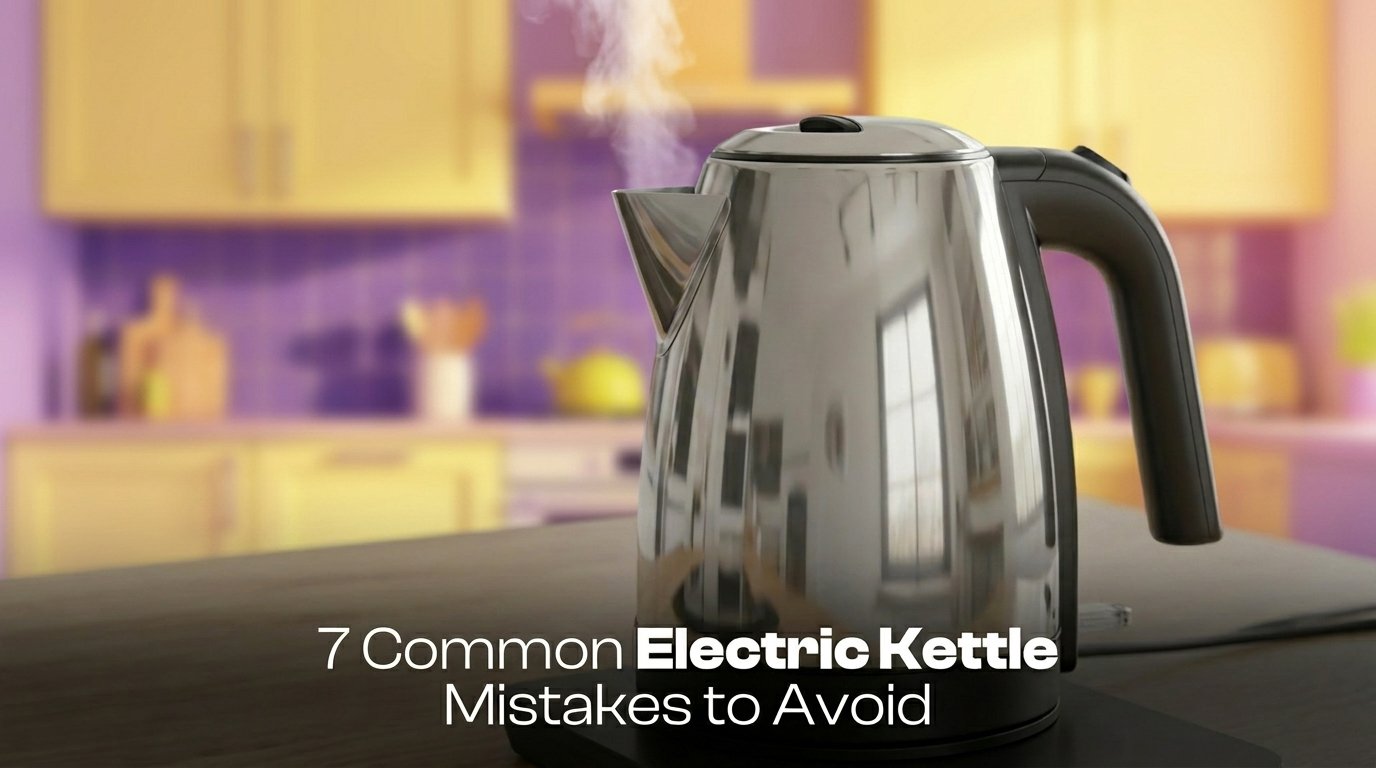
Have you ever been in a rush on a chilly winter morning in Lahore, or stayed up late in Karachi craving a hot cup of Karak Chai, only for your electric kettle to stop working? It is a frustratingly common household problem faced by thousands of families across Pakistan. Many users notice their kettles taking twice as long to heat, giving the water a strange metallic taste, or even worse—tripping the home circuit breaker or blowing a fuse.
The real issue often isn’t the machine or the brand itself, but how we handle it daily. While a high-quality electric kettle is one of the most essential home and kitchen appliances in modern Pakistani households, it requires proper care, regular cleaning, and smart usage to perform at its peak efficiency. By avoiding these 7 common mistakes, you can ensure your appliance operates safely, saves electricity, and lasts for years to come.
If you are looking to upgrade your kitchen setup or replace an old, burned-out model, you can always find the best electric kettle price in Pakistan and explore a premium selection of energy-efficient electric kettles at kiachahiye.com.
1. Overfilling Past the Maximum Mark (The Overflow Danger)
Filling your kettle to the absolute brim to brew extra cups of tea or coffee in a single go is a very common but highly dangerous habit in large households.
- The Technical Risk: When water reaches its boiling point, it expands dynamically and bubbles vigorously. An overfilled kettle will force scalding water to violently spill out of the spout. This boiling water can easily seep down the sides of the body and enter the 360-degree electrical power base. This causes immediate short-circuits, permanent rust on the internal wiring, or potentially fatal electric shocks.
- The Impact on Appliance: It corrodes the contact pins on the base, rendering the entire unit useless even if the kettle body is perfectly fine.
- The Fix: Always respect the “Max Fill” line clearly marked on the water gauge windows. If you have a large family or frequently entertain guests, stop forcing a small 1-liter appliance to do extra work. Instead, browse the high-capacity, heavy-duty stainless steel electric kettles (1.7L to 2.0L) available on kiachahiye.com to meet your household needs safely.
2. Running the Kettle Empty (Dry Boiling the Element)
Switching on an electric kettle with little to no water inside is the fastest way to permanently kill your kitchen appliance. This mistake usually happens when we are distracted, multitasking, or when children use the appliance without checking inside.
- The Technical Risk: Modern electric kettles use highly powerful, concealed heating elements to boil water rapidly (often within 2 to 3 minutes). Without water to act as a heat sink and absorb this intense thermal energy, the internal metal base overheats exponentially within seconds.
- The Impact on Appliance: This extreme “dry boiling” can melt internal plastic seals, crack the glass walls of premium glass kettles, warp the stainless steel plate, and instantly burn out the heating coil. In worst-case scenarios, it can spark a serious kitchen fire.
- The Fix: Make it an absolute rule to check the water level before hitting the “on” switch. Always ensure the water covers at least the minimum level mark (usually 0.5 Liters). If you are prone to forgetting, look for modern smart appliances equipped with an automatic Boil-Dry Protection sensor, which automatically cuts off power if no water is detected.
3. Ignoring Limescale and Mineral Buildup (The Silent Power Thief)
Hard water (khara pani) is a massive, widespread issue in almost all major cities across Pakistan, including Karachi, Lahore, Rawalpindi, and Faisalabad. Over time, groundwater minerals like calcium carbonate and magnesium leave behind a chalky, hard, white or yellowish crust known as limescale at the bottom of your kettle.
- The Technical Risk: Limescale acts as a thick, thermal-insulating barrier over the heating element. Because the heat cannot transfer directly to the water, your kettle is forced to work twice as hard, running for a much longer duration to boil the same amount of water.
- The Impact on Appliance: This drastically increases your monthly electricity bill and triggers premature thermal failure of the element. Furthermore, peeling scale flakes will ruin the appearance and taste of your tea, green tea, or coffee, leaving unhygienic white residue at the bottom of your mug.
- The Fix: You must descale your kettle every 1 to 3 months depending on the hardness of your local water supply. You don’t need to buy expensive chemical descalers; simply fill the kettle with a mixture of equal parts water and white vinegar (or use 2 tablespoons of citric acid/lemon slices). Bring it to a boil, let it sit for 60 minutes to dissolve the crust, scrub gently with a soft sponge, and rinse thoroughly with clean water.
4. Leaving Leftover Water Inside the Kettle for Long Periods
It is incredibly tempting to leave unused boiled water sitting inside the kettle so you can just flip the switch and re-boil it whenever you want a fresh cup later in the day. However, this seemingly harmless habit quietly degrades the appliance from the inside out.
- The Technical Risk: When water sits stagnant inside a metallic environment for hours or days, it accelerates the process of oxidation and mineral crystallization. Even high-grade stainless steel kettles can develop tiny rust spots (pitting corrosion) over time if continuously exposed to stagnant hard water.
- The Impact on Appliance: It creates a flat, stale, and highly metallic aftertaste in your drinks. Additionally, a warm, damp, enclosed kettle environment can become a breeding ground for microscopic bacteria and mold growth if left unchecked over a weekend.
- The Fix: Only boil the precise amount of water you actually need for that specific moment. This also saves energy! If there is any leftover water, empty it out completely into your plants or sink immediately after use. Leave the lid open for a few minutes so the residual heat can air-dry the interior completely, keeping your kettle fresh, sterile, and odor-free.
5. Boiling Non-Water Liquids (The Milk and Chai Catastrophe)
An electric kettle is engineered, programmed, and calibrated strictly for boiling pure water. Using it as a multi-cooker, a milk warmer, or trying to make “Doodh Patti” directly inside it is a recipe for instant appliance failure.
- The Technical Risk: Liquids like milk, soup, or water heavily mixed with sugar and tea leaves behave completely differently than plain water. Milk contains fats, proteins, and sugars that foam up rapidly when heated. It will overflow out of the lid within seconds, flooding your kitchen counter and the electrical base below.
- The Impact on Appliance: The sugars and proteins in milk will instantly char, burn, and stick to the hot bottom heating plate. This burnt black layer destroys the kettle’s internal thermostat sensors, meaning the kettle will either fail to turn off automatically or refuse to turn on at all. Cleaning this burnt milk crust without scratching and ruining the interior coating is virtually impossible.
- The Fix: Use your electric kettle exclusively for boiling pure water. For making traditional milk-based tea, warming milk, or making instant noodles, stick to your traditional saucepans on your gas stove. If you want maximum convenience, use the kettle to flash-boil water in 60 seconds, and then pour that hot water into your mug containing tea bags, green tea leaves, or milk powder.
6. Neglecting Basic Electrical Safety and Circuit Load
Because electric kettles are designed to heat water incredibly fast, they draw a massive amount of electrical current. A typical electric kettle operates between 1500 Watts to 2200 Watts of power. Treating them like low-power phone chargers or table lamps is an invitation to electrical hazards.
- The Technical Risk: Plugging a heavy-wattage kettle into a loose, old wall socket, a cheap local extension cord, or sharing a multi-plug adapter with other heavy appliances (like an air fryer, microwave oven, or automatic washing machine) creates extreme electrical resistance.
- The Impact on Appliance: This resistance causes rapid heat buildup in the wires, which can melt the plastic plug, create dangerous electrical sparks, trip your home’s main circuit breaker, or even trigger a short-circuit fire.
- The Fix: Always plug your electric kettle directly into a dedicated, high-quality, stable wall outlet that can handle the wattage. Never use cheap extension cords. Furthermore, always ensure the power base sits firmly on a flat, completely dry, heat-resistant kitchen counter, well away from the kitchen sink to prevent accidental water splashes from touching the live electrical wire.
7. Disregarding the Manufacturer’s User Manual
Whether you buy an affordable budget-friendly option or a high-end premium imported model, every brand—be it WestPoint, Anex, Black & Decker, Philips, or Kenwood—comes with a specific printed booklet of guidelines that most Pakistani consumers immediately throw into the trash.
- The Technical Risk: By tossing the manual aside, you miss vital information specific to your model. For instance, many users don’t realize their kettle has a removable anti-scale mesh filter hidden behind the spout that needs to be taken out and washed under tap water every few weeks to prevent clogging.
- The Impact on Appliance: Cleaning your kettle with harsh metallic scrubbers (like steel wool) or unauthorized chemicals can permanently strip away the protective coating inside, instantly voiding your official manufacturer warranty.
- The Fix: Spend just 5 minutes skimming through the user guide when you unbox your new appliance. Understanding the exact indicator lights, cleaning specifications, and safety parameters of your specific model helps you maximize its operational lifespan. For authentic appliance brands that come with official, verifiable manufacturer warranties, kiachahiye.com is your ultimate online shopping destination.
Quick Reference: Do’s and Don’ts for Your Electric Kettle
What to DO ✅ | What to AVOID ❌ |
Fill water between the Min and Max indicators. | Never fill water up to the brim or run it completely empty. |
Descale with vinegar or lemon juice every month. | Never use steel wool or harsh chemicals to scrub the inside. |
Empty out leftover water immediately after use. | Never leave water sitting inside overnight. |
Plug directly into a heavy-duty wall socket. | Never use cheap extensions or overload the power strip. |
Use exclusively for boiling pure water. | Never boil milk, tea leaves, soup, or eggs inside. |
Electric Kettle Buying Guide: What to Look for Before Purchasing Online?
If your current kettle is showing signs of aging—taking too long to boil, leaking water from the bottom, or emitting a burnt smell—it is time for an upgrade. When shopping for kitchen appliances online in Pakistan, keep these key factors in mind to get the best value for your money:
- Material Matters: Stainless steel and borosilicate glass kettles are highly recommended. They are durable, hygienic, plastic-free, and do not impart any strange chemical odor or metallic taste to your water compared to low-grade plastic models.
- Wattage and Speed: Look for a kettle with at least 1850W to 2200W of power. Higher wattage means your water will boil much faster, saving you valuable time during busy school and office mornings.
- Safety Features: Ensure the model explicitly features Automatic Shut-Off (turns off automatically once water boils) and Boil-Dry Protection (shuts off if there is no water inside).
- Ergonomic Design: A 360-degree cordless swivel base allows you to lift and place the kettle effortlessly from any angle, making it convenient for both right and left-handed users.
Conclusion:
A premium electric kettle is a fantastic, time-saving investment for any modern Pakistani kitchen, offering unmatched speed and efficiency compared to slow gas stoves. However, its long-term durability depends entirely on how you treat it on a daily basis. By eliminating these 7 common mistakes from your kitchen routine, you can enjoy fast, clean, and perfectly boiled water for years to come.
When it’s finally time to replace your old appliance or upgrade your kitchen setup, don’t waste your hard-earned money on low-quality, unbranded imitations that break down within a few weeks.
Frequently Asked Questions (FAQs)
Q1: Why does my electric kettle turn off before the water is fully boiled? +
This is a sample answer. You can edit this in the widget settingsa
This usually happens due to severe limescale buildup at the bottom plate. The thick layer of scale traps the heat underneath it, fooling the internal thermostat sensor into thinking the water has reached boiling temperature, causing it to shut off prematurely. Descaling your kettle with white vinegar or lemon juice will fix this issue immediately.
Q2: Is it safe to drink water boiled in a plastic electric kettle? +
It depends on the quality of the plastic. Low-quality, cheap plastic kettles can leach harmful chemicals like Bisphenol A (BPA) into your hot water, giving it a distinct plastic smell and taste. If you prefer plastic for its lightweight body, ensure it is certified BPA-Free, or safely opt for healthy stainless steel or glass electric kettles available on kiachahiye.com.
Q3: How much electricity does an electric kettle consume in Pakistan? +
While an electric kettle has a high wattage (1500W–2200W), it only runs for about 2 to 3 minutes per use. Because its operation time is incredibly short, it actually consumes very little electricity compared to keeping a water dispenser heating system running all day or using a microwave oven multiple times. It is highly energy-efficient and helps save gas.
Q4: Can I wash my electric kettle under running tap water? +
You can wash the inside of the kettle, but you must never submerge the kettle body in water or wash it under a running tap where water can enter the bottom electrical pin connector. Water entering the base or the electrical contacts under the kettle will cause a short circuit and permanently damage the electronic components. Always wipe the exterior with a damp cloth instead.
Q5: Why is there a white layer or flakes floating in my boiled water? +
Those white flakes are not dirt or plastic pieces; they are calcium and magnesium deposits known as limescale. This happens when you boil hard water (khara pani). While it is not toxic or harmful to health, it ruins the taste of your tea or coffee. Regular monthly descaling will eliminate these flakes completely.
Q6: Can we boil eggs or make noodles in an electric kettle? +
Strictly speaking, no. Standard electric kettles are designed only for water. Starchy liquids from noodles or egg residue can burn on the heating element, making it nearly impossible to clean and destroying the auto-shutoff sensor. If you want to cook food, you should look for a specialized Multi-Purpose Electric Kettle or a mini electric hot pot instead of a standard tea kettle.
Q7: Why does my new electric kettle smell like burnt plastic? +
It is very common for a brand-new electric kettle to emit a slight plastic or chemical odor during its first 2 to 3 uses. This is caused by the protective coatings used during manufacturing heating up for the first time. To remove this, boil water 2–3 times with lemon slices or white vinegar and discard the water before using it for drinking.
Q8: What is the difference between a concealed and an exposed heating element? +
An exposed element has a visible metal coil inside the kettle, which comes into direct contact with water; these are harder to clean and catch limescale very quickly. A concealed element is hidden under a flat stainless steel plate at the bottom. Kettles with concealed elements are much easier to wipe clean, safer, and last much longer.
Q9: Can I leave my electric kettle plugged into the wall socket all the time? +
While modern kettles have auto-cutoff features, it is highly recommended to unplug the kettle when not in use. In Pakistan, sudden voltage fluctuations or power surges can damage the delicate internal thermostat circuits of the power base if it remains plugged into a live socket.