







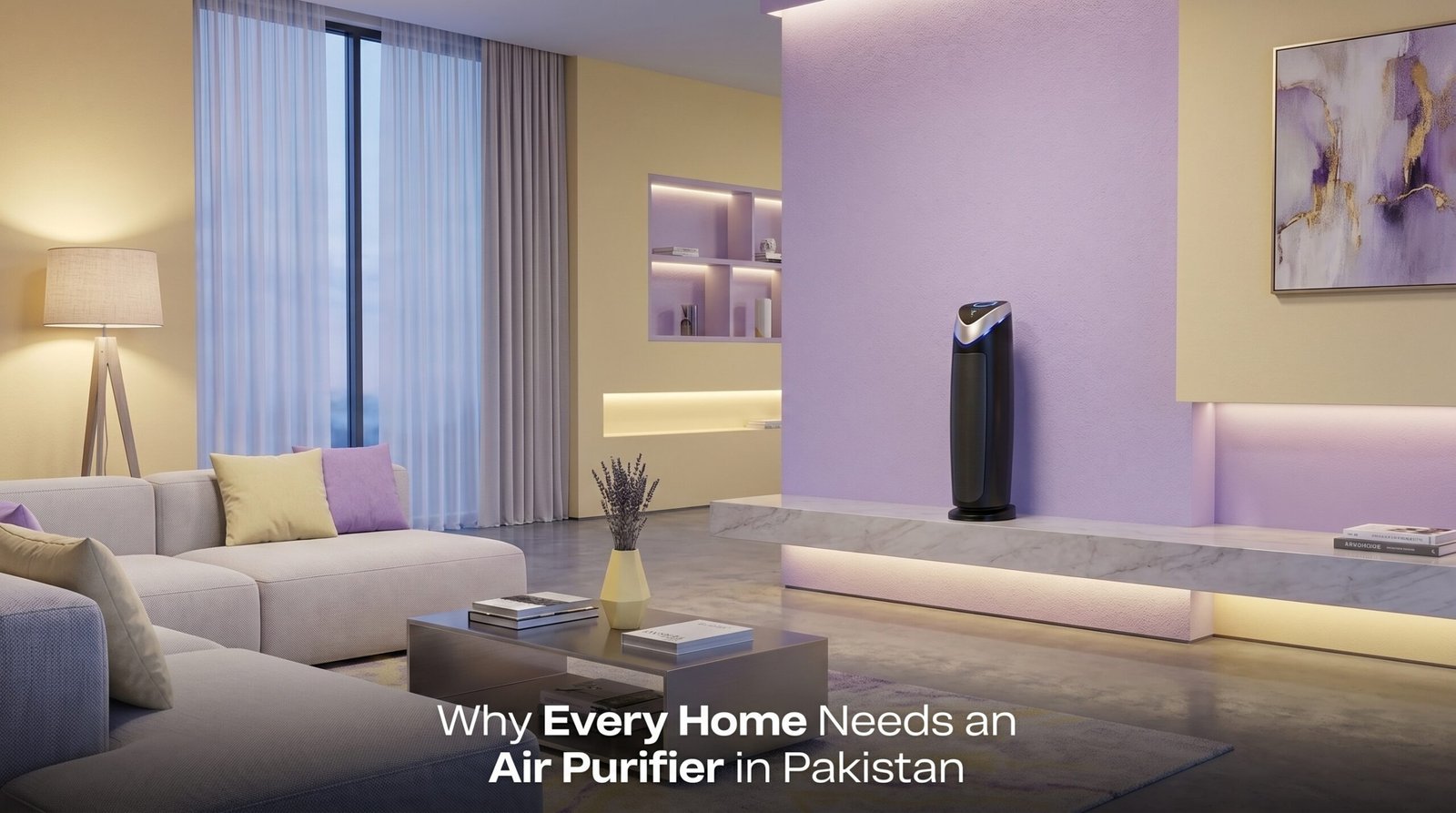
Why Every Home Needs an Air Purifier in Pakistan

The Ultimate Comprehensive Guide
Air pollution in Pakistan has officially transitioned from a seasonal inconvenience to a permanent, year-round national health crisis. According to recent World Air Quality reports, Pakistan’s average PM2.5 concentration regularly breaches safe limits, soaring nearly 15 times higher than the thresholds established by the World Health Organization (WHO).
During the dreaded winter smog season, major urban hubs like Lahore, Karachi, Peshawar, and Islamabad experience hazardous spikes, with daily PM2.5 levels soaring past 300 µg/m³—and in peak weeks, breaking the scale beyond 600 µg/m³. With outdoor air becoming increasingly toxic, sealing your windows isn’t enough. Safe indoor air is no longer a luxury; it is a fundamental necessity.
What Is an Air Purifier & How Does It Work?
An air purifier is a specialized, sealed motorized device designed to sanitize indoor air by filtering out microscopic airborne toxins, allergens, gases, and pathogens. It works on a simple yet highly engineered cycle: a powerful internal fan draws in ambient air, forces it through a series of specialized physical filters, and releases purified air back into the room.
The most reliable units on the Pakistani market utilize a high-efficiency, multi-layered filtration system to combat local dust and industrial emissions:
1. The Pre-Filter Layer
The first line of defense. Usually made of a washable mesh or foam material, it traps large, visible debris like pet hair, lint, human dander, and heavy dust clumps. By capturing these large particles, it prevents the micro-pores of the inner filters from clogging, dramatically extending the lifespan of the more expensive components.
2. True HEPA (High-Efficiency Particulate Air) Filters
The absolute core of any high-performing purifier. A certified True HEPA filter is a medical-grade material made of randomly arranged fiberglass fibers. These filters trap up to 99.97% of particles as small as 0.3 microns. This specific rating means it effortlessly captures PM2.5 particles, combustion soot, microscopic pollen, industrial dust, and mold spores.
3. Activated Carbon Filters
While HEPA filters catch solid particles, they cannot stop gases. This is where the Activated Carbon filter comes in. Using highly porous carbon granules that have been treated with oxygen, this layer chemically adsorbs Volatile Organic Compounds (VOCs), harsh household odors, cooking smoke, tobacco smoke, and dangerous chemical fumes from household cleaners.
4. Advanced Tertiary Technologies (UV-C & Ionizers)
Some modern, premium air purifiers incorporate optional sanitization layers:
- UV-C Light: Destroys the DNA of airborne bacteria, viruses, and mold spores as they pass through the unit.
- Ionizers: Release negatively charged ions into the air, causing microscopic particles to clump together so they become heavy enough to fall to the ground or be easily sucked up by the purifier’s primary filters.
Why Indoor Air Quality Is Worsening in Pakistani Homes
Many people mistakenly believe that staying indoors behind closed doors protects them from the toxic outdoor atmosphere. However, environmental research shows that indoor air quality in Pakistan is often 2 to 5 times worse than outdoor air. This phenomenon is driven by several compounding environmental and behavioral factors:
The Phenomenon of Infiltrating Smog
Fine particulate matter (PM2.5) is incredibly tiny—about 30 times smaller than the width of a single human hair. Because of this, standard wooden doors, sliding windows, and ventilation bricks common in Pakistani architecture cannot block them. Outdoor smog continuously seeps through micro-gaps, filling your bedrooms and living lounges silently.
The Lack of Controlled Ventilation
Due to extreme weather conditions—heavy air conditioning in the scorching summers and sealed rooms during the freezing winter smog months—Pakistani homes suffer from “Sick Building Syndrome.” We recirculate the same stagnant air for days, building up high concentrations of carbon dioxide and trapped toxins.
Rapid Urbanization and Infrastructure Dust
With continuous construction, road tearing, and unpaved pathways across major cities, heavy fine dust is constantly kicked up into the atmosphere. This dust settles on shoes, clothes, and pets, eventually migrating deep inside our carpeted or tiled living spaces.
Internal Residential Pollutants
Our daily domestic habits contribute massively to poor indoor air quality:
- Traditional Cooking: Deep frying, spice tempering (tadka), and natural gas combustion in Pakistani kitchens release immense amounts of grease smoke, carbon monoxide, and nitrogen dioxide.
- Chemical Cleaners: The widespread use of strong phenyls, acid-based floor cleaners, and synthetic aerosol air fresheners introduces toxic chemical VOCs into the air.
- Unvented Heating: Using gas or open-flame heaters in winter without adequate exhaust mechanisms generates dangerous levels of combustion byproducts.
Top Reasons Why Every Home Needs an Air Purifier
HOW AN AIR PURIFIER TRANSFORMS YOUR HOME
- Defeats Smog & PM2.5: Extracts toxic blood-entering particles.
- Allergy & Asthma Relief: Traps pollen, pet dander, and dust mites immediately.
- Eliminates Cooking Odors: Adsorbs kitchen grease, smoke, and chemical VOCs.
- Protects Vulnerable: Creates a safe breathing haven for kids & elders.
- Enhances Sleep Quality: Eliminates nighttime congestion and dry coughing.
1. Defeats Winter Smog and Destructive PM2.5
PM2.5 particles are dangerous because their microscopic size allows them to bypass the human respiratory system’s natural filtration (nasal hair and mucus). They penetrate deep into the lungs and cross directly into the bloodstream, leading to long-term cardiovascular issues. A high-efficiency air purifier rapidly strips these hazardous particles from your immediate environment, giving your lungs a chance to recover.
2. Provides Immediate Relief for Allergies and Asthma
If you or your family members suffer from constant morning sneezing, watery eyes, or wheezing, the culprit is likely indoor allergens. By trapping dust mites, seasonal grass pollen, and pet dander, the best air purifiers for allergies significantly reduce corporate absenteeism and sudden, terrifying nighttime asthma flare-ups.
3. Eradicates Stubborn Odors and Corrosive Chemical Fumes
Whether it is the stubborn smell of fried onions from the kitchen, the chemical off-gassing of fresh wall paint, or the strong scent of household disinfectants, an air purifier’s carbon layer actively scrubs the air. It keeps your indoor environment smelling clean, neutral, and fresh without relying on masking sprays.
4. Safeguards Vulnerable and Elderly Family Members
Infants, growing children, elderly grandparents, and individuals with pre-existing heart or respiratory conditions are hit hardest by poor air quality. Children breathe more rapidly than adults, absorbing more toxins per kilogram of body weight. Running an air purifier provides them with a biologically safe haven inside their home.
5. Drastically Improves Sleep Quality
Breathing dry, polluted air throughout the night causes airway inflammation, resulting in snoring, throat irritation, dry mouth, and frequent awakenings. Purified air keeps the nasal passages clear and hydrated, ensuring deeper, uninterrupted, and truly restorative sleep cycles.
How to Choose the Right Air Purifier for Your Home
Purchasing an air purifier without checking its technical specifications can lead to an underperforming machine that wastes electricity. Before finalizing your purchase, keep these crucial technical factors in mind:
Room Size & Coverage Area
Every air purifier is rated for a specific room volume. Measure your room’s length and width before buying. A unit designed for a small bedroom will fail completely if placed in a large open-concept living lounge. Always choose a machine with a coverage rating slightly higher than your room size.
CADR (Clean Air Delivery Rate)
CADR indicates the cubic meters or feet of air the purifier can process per hour. It measures efficiency across three distinct pollutants: smoke, dust, and pollen. A higher CADR rating means the machine will cycle and scrub the air in your room much faster, which is critical during high-pollution days.
Filter Replacement Cost & Local Availability
This is the most critical factor for buyers in Pakistan. True HEPA filters are consumables—they cannot be washed and reused indefinitely; they must be replaced. Before buying an imported brand, verify if replacement filters are readily available in the local market and check their costs. A cheap machine with unavailable or extremely expensive replacement filters becomes useless within months.
Energy Efficiency & Inverter Motors
Given the escalating electricity tariffs in Pakistan, operational cost is a major consideration. Look for units equipped with smart sensors and energy-efficient DC or inverter motors. Most modern purifiers run on exceptionally low wattage on auto mode, ensuring your monthly utility bills remain unaffected.
Top Air Purifiers in Pakistan: Specs, Performance & Pricing
To help you combat Pakistan’s intense dust and smog levels, we have curated a comprehensive list of the top-performing air purifiers available in the market based on CADR efficiency, true HEPA performance, electricity consumption, and long-term brand reliability.
Brand & Model | Approx. Price (PKR) | Ideal Room Size | Key Highlights |
Philips AC0920/10 | Rs. 54,900 | Small Rooms / Bedrooms | NanoProtect HEPA, Ultra-Quiet, Smart Auto Mode |
Philips AC1711/90 | Rs. 89,000 | Medium to Large Lounges | High CADR Powerhouse, Real-time Air Quality Index |
Royal RAP-7000 | Rs. 42,990 | Medium to Large Spaces | Digital Inverter Tech, Low Power Draw, Multi-Stage |
Homage HAP-403DWB | Rs. 51,300 | Mid-to-Large Family Rooms | Heavy-Duty Dust Extraction, Intuitive Touch Controls |
Royal RAP-5000 | Rs. 31,995 | Standard Rooms | Budget-Friendly, Certified True HEPA Performance |
Homage HAP-251DWB | Rs. 31,100 | Small Offices / Bedrooms | Compact Profile, Cost-Effective Operational Maintenance |
1. Philips Air Purifier AC0920/10
- Price: Rs. 54,900
- Best For: Bedrooms, home offices, and small living spaces. Offers a sleek, compact cylindrical design with highly efficient, whisper-quiet night modes. It utilizes Philips’ proprietary NanoProtect HEPA technology to pull down indoor pollutants efficiently.
2. Philips Air Purifier AC1711/90
- Price: Rs. 89,000
- Best For: Medium to large master bedrooms or TV lounges. This is a premium, high-CADR powerhouse explicitly built to tackle heavy, persistent smog seasons in cities like Lahore. It features a digital real-time air quality display that changes color based on current indoor PM2.5 levels.
3. Royal Air Purifier RAP-7000 (Digital Inverter)
- Price: Rs. 42,990
- Best For: Everyday family living lounges. It incorporates advanced energy-saving Digital Inverter technology, offering maximum cubic-feet-per-minute purification performance with incredibly low power draw, making it highly suitable for continuous 24/7 operations.
4. Homage Air Purifier HAP-403DWB
- Price: Rs. 51,300
- Best For: Mid-to-large family rooms and high-traffic spaces. It features an enhanced filter capacity specifically tailored for Pakistani homes dealing with severe construction dust, heavy outdoor traffic soot, or internal pet allergies.
5. Royal Air Purifier RAP-5000
- Price: Rs. 31,995
- Best For: Standard size rooms. This unit provides a fantastic balance of performance and affordability, offering everyday budget-friendly air purification without compromising on strict True HEPA certified filtration standards.
6. Homage Air Purifier HAP-251DWB
- Price: Rs. 31,100
- Best For: Small apartments, study rooms, or budget-conscious buyers looking for reliable, basic multi-stage physical filtration for compact spaces.
Smart Shopping Tip: Prices fluctuate frequently due to currency shifts and seasonal high demands. To find the most accurate up-to-date deals, active discount offers, and verified vendor listings like Japan Electronics, always check out kiachahiye.com.
Common Myths About Air Purifiers Debunked
Despite their clear health benefits, many misconceptions prevent people from investing in an air purifier. Let us clear the air by debunking the most common myths prevalent in Pakistan:
Myth 1: “My inverter air conditioner already purifies the air.”
Fact: Standard home air conditioners are designed to cool or heat air and recirculate it. They contain a basic, coarse plastic mesh filter meant solely to catch large dust lint so the AC’s internal coils don’t clog. They completely lack the dense material structure needed to capture microscopic PM2.5 particles, gases, or viruses. An AC cools; it does not sanitize.
Myth 2: “Air purifiers are only meant for sick people or asthma patients.”
Fact: Prevention is far better than cure. Breathing heavily polluted air day in and day out causes cumulative, oxidative damage to healthy lungs, which can manifest as chronic respiratory issues later in life. An air purifier preserves lung health in completely healthy individuals and protects the rapidly developing respiratory systems of growing children.
Myth 3: “Running a purifier all day will cause massive electricity bills.”
Fact: High-quality modern air purifiers are incredibly energy efficient. Most run on just 20 to 50 watts of electricity at maximum speed, which is significantly less than a standard AC-motor ceiling fan and a fraction of what an air conditioner consumes. Running one all day costs mere pennies.
Myth 4: “Plants can purify indoor air just as effectively as a machine.”
Fact: While indoor plants look beautiful and produce small amounts of oxygen, NASA studies show that you would need a literal indoor jungle—hundreds of plants packed tightly into a single room—to match the clean air delivery rate (CADR) of just one standard HEPA air purifier.
Final Verdict: Find Exactly What You Need at KiaChahiye.com
As regional pollution indexes continue to climb aggressively every single year, relying on natural ventilation or simple closed windows is no longer a safe option for your family. Protecting your home from toxic urban smog, fine household dust, kitchen gas emissions, and airborne allergens is a critical investment in your long-term physical health and peace of mind. Clean indoor air is no longer optional in Pakistan—it is essential for survival, comfort, and general well-being.
Frequently Asked Questions (FAQs)
Q1. Are air purifiers really effective against the heavy winter smog in cities like Lahore? +
Yes, absolutely. Certified True HEPA air purifiers are specifically engineered and tested to trap 99.97% of fine airborne particles as small as 0.3 microns. This includes the hazardous PM2.5 carbon soot, industrial smoke, and heavy seasonal smog pollutants commonly found choking cities like Lahore, Karachi, and Faisalabad.
Q2. Can I wash and reuse a True HEPA filter to save on costs? +
No. True HEPA filters are made from a delicate, specialized web of micro-fiberglass. Washing them with water or blowing them with compressed air destroys the intricate arrangement of these fibers, permanently ruining their ability to trap microscopic particles. While you can wash the plastic pre-filter, the main HEPA and Carbon filters must be replaced entirely once spent.
Q3. How often do I need to replace the filters in a Pakistani household? +
In typical conditions, a HEPA filter lasts between 6 to 12 months, and an activated carbon filter lasts 3 to 6 months. However, because air pollution levels spike aggressively to hazardous levels during the winter smog season in Pakistan, your filters will collect dust much faster. It is highly recommended to check your unit’s filter indicator light and replace them right before the winter season begins.
Q4. Should I keep my doors and windows completely closed while the air purifier is running? +
Yes. To get the best possible performance, keep your windows and doors closed tightly while the unit is operating. Leaving them open allows outdoor smog and dust to constantly flood your room, creating an infinite loop that overwhelms the machine, reduces its cleaning efficiency, and wears out the filters prematurely.
Q5. Where can I find and compare genuine air purifier prices and specs in Pakistan? +
Q6. Can an air purifier eliminate the smell of cooking oils and spices in the kitchen? +
Yes, if it has a dense Activated Carbon filter. While the HEPA filter traps physical smoke particles, the activated carbon layer adsorbs the volatile gases and strong odors generated by traditional deep-frying, burning gas stoves, and spice tempering (tadka).
Q7. How much electricity does an air purifier consume on a daily basis? +
Most modern air purifiers are designed for continuous usage and consume between 20W to 60W of power at peak fan speeds. If you utilize an inverter-based model (like the Royal RAP-7000) on auto mode, it drops its consumption down to around 5W to 10W once the air is clean—consuming less power than a standard LED light bulb.
Q8. Is it safe to leave an air purifier running continuously overnight? +
Yes, it is entirely safe and highly recommended. Air purifiers are built with continuous-duty motors designed to run 24/7 safely. Running the unit overnight ensures that you breathe pristine, clean air while sleeping, preventing morning congestion and dry throat. Most models include a "Sleep Mode" that dims lights and lowers fan noise to a whisper.
Q9. Where is the best place to position an air purifier inside a room? +
For maximum efficiency, place the air purifier in an open spot with at least 1 to 2 feet of clear space around its air intakes and outlets. Avoid placing it tightly against walls, behind curtains, or underneath furniture. Positioning it close to your bed or main seating area ensures you receive the cleanest air directly.
Q10. Does an air purifier remove oxygen from the room or dry out the air? +
No. Air purifiers only pass room air through physical, porous filters to capture solid particles and target gases. They do not alter the oxygen or carbon dioxide levels in the air, nor do they add or remove moisture. They have absolutely no impact on room humidity levels.