







Top 10 Common AC Problems & How to Fix Them

Common AC Problems and Their Easy Solutions
Nothing ruins summer comfort faster than a failing air conditioning unit. When your home starts feeling unbearable, immediate relief is all that matters. Fortunately, you do not always need an expensive HVAC technician to get your system back up and running.
Many common air conditioner issues stem from minor, easily fixable causes like clogged filters, incorrect thermostat settings, or dirty coils. This comprehensive troubleshooting guide breaks down the most frequent AC problems, their underlying root causes, step-by-step DIY solutions, and preventive maintenance tips to keep your system running at peak efficiency.
Quick Reference: AC Symptoms & Immediate Fixes
Symptom | Primary Cause | First Step / DIY Solution |
Blowing Warm Air | Dirty filter or thermostat set incorrectly | Set to “Cool” / Replace air filter |
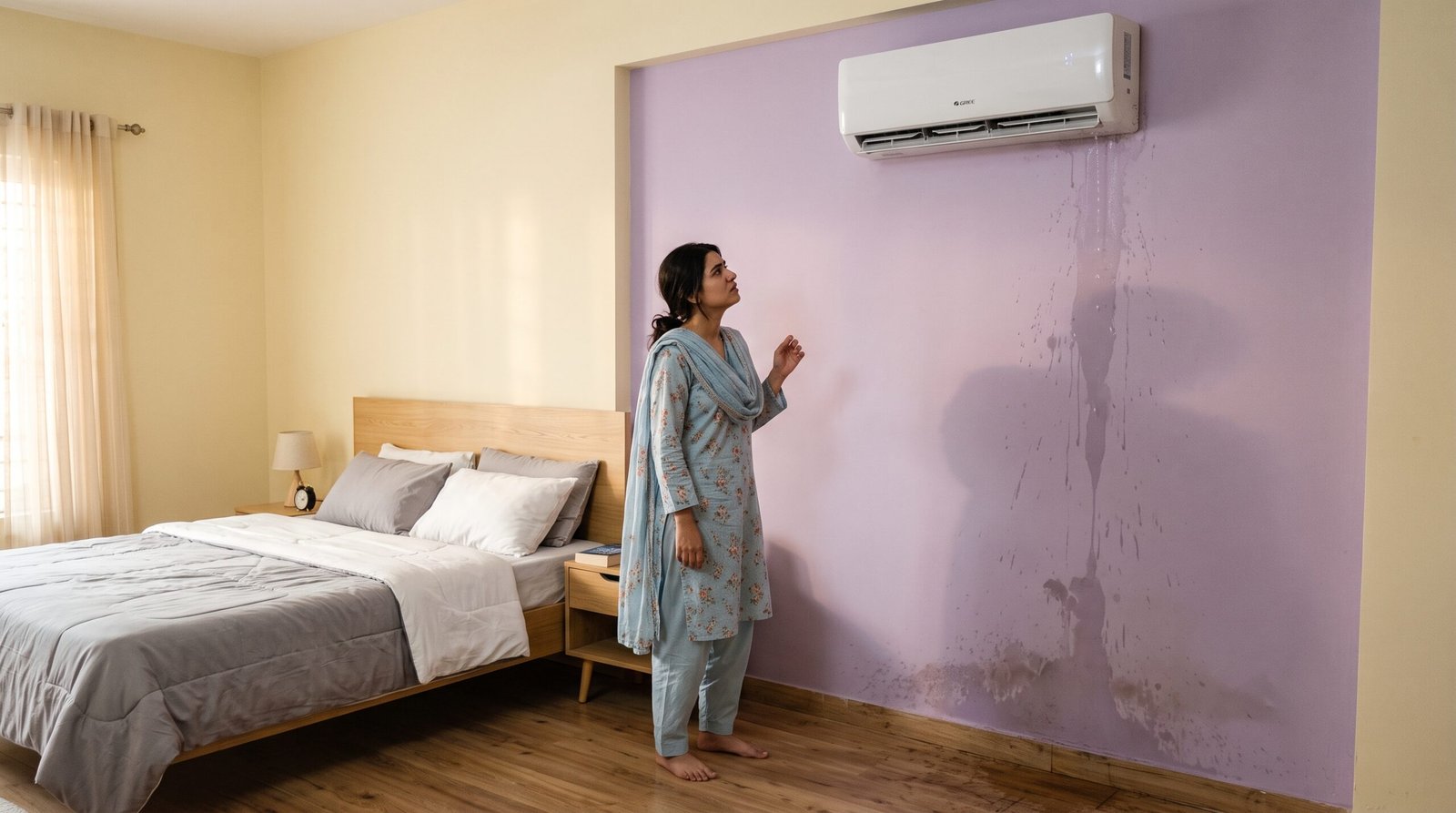
Water Leaking Indoors | Clogged condensate drain line | Flush drain line with vinegar & suction with wet/dry vac |
AC Won’t Turn On | Tripped circuit breaker or dead thermostat batteries | Reset breaker / Replace thermostat batteries |
Ice on Coils | Restricted airflow or low refrigerant | Turn unit OFF, change filter, let coils thaw completely |
Squealing / Grinding Noise | Worn fan belt or motor bearing failure | Lubricate bearings or call a technician to replace belt |
Musty Smell | Mold/Bacteria growth in drain pan or coils | Clean evaporator coils & flush condensate line |
Short Cycling (On/Off) | Oversized unit or filthy filter | Clean filter; ensure thermostat is away from heat sources |
1. Air Conditioner Blowing Warm Air
One of the most frustrating AC issues occurs when the fan blows continuously, but the air coming out of the vents is warm or room temperature.
Potential Causes
- Incorrect Thermostat Settings: The thermostat is set to “Fan Only” or “Heat” instead of “Cool.”
- Filthy Air Filter: Extreme dust buildup restricts airflow, forcing the system to overheat or freeze.
- Dirty Outdoor Condenser Unit: Dirt, leaves, and debris block heat transfer from the outdoor coils.
- Refrigerant Leak: Low refrigerant levels prevent the system from cooling the air effectively.
How to Fix It
- Check Thermostat Settings: Ensure your thermostat is set to “Cool” and the fan switch is on “Auto” rather than “On.” Setting the fan to “On” keeps air circulating even when the compressor isn’t cooling.
- Inspect & Change the Air Filter: Slide out your return vent filter. If it looks grey, thick with dust, or opaque, replace it immediately.
- Clear the Outdoor Unit: Turn off power to the outdoor compressor unit. Hose down the exterior fins with light water pressure to remove mud, leaves, and lawn clippings. Keep a 2-foot clearance around the unit free of vegetation.
- Inspect Refrigerant Lines: If you notice ice buildup on the copper refrigerant lines or hear a faint bubbling/hissing sound, you likely have a refrigerant leak. Turn off the system and contact an HVAC professional.
2. AC Unit Leaking Water Indoors
A pool of water collecting around your indoor air handler or dripping from the ceiling demands immediate attention to avoid costly structural water damage and mold growth.
How the Water Flow Works
Under normal operation, moisture collected by the evaporator coil drips into a drain pan and flows out through a PVC condensate pipe outside your home. When this pathway is blocked, water backs up and spills indoors.
Potential Causes
- Clogged Condensate Drain Line: Algae, dirt, and mold trap water inside the drain line, causing the drain pan to overflow.
- Cracked Drain Pan: Older rust-prone or cracked plastic drain pans allow water to leak out directly.
- Frozen Evaporator Coils: Melting ice from frozen coils overpowers the drain system.
- Disconnected Drain Line: The PVC pipe fitting coming out of the evaporator unit has slipped off.
How to Fix It
- Clear the Clog: Locate the T-shaped PVC cap on your indoor drain line. Pour 1/2 cup of regular household white vinegar down the pipe to kill algae and bacterial buildup.
- Use a Wet/Dry Vac: Attach a wet/dry shop vacuum to the outdoor end of the condensate drain line to suck out stubborn sludge, standing water, and blockage.
- Inspect the Pan: Shine a flashlight into the drain pan beneath your indoor coil. Check for cracks, rust holes, or misaligned fittings. Replace damaged drain pans immediately.
3. The AC Unit Won’t Turn On at All
When you lower the temperature on your thermostat and hear complete silence from both indoor and outdoor units, the problem usually relates to electrical delivery or safety shutoff switches.
Potential Causes
- Tripped Circuit Breaker: High power demand caused the breaker panel to flip for safety.
- Dead Thermostat Batteries: The thermostat lost power and cannot communicate with the AC unit.
- Float Switch Triggered: Standing water in the overflow pan activated the safety float switch, cutting off power to prevent flooding.
- Blown Capacitor: The start/run capacitor on the outdoor compressor has failed.
How to Fix It
- Check the Breaker Box: Locate your home’s main electrical panel. Look for the circuit breaker labeled “AC” or “HVAC.” If it is in the middle or “Off” position, flip it firmly to “Off,” then back to “On.”
- Replace Thermostat Batteries: Open the thermostat faceplate and insert fresh AA or AAA alkaline batteries.
- Check the Safety Float Switch: Inspect the drain pan near the indoor unit. If it contains water, clear the drain line clog to allow the float switch to sink back down and restore power.
4. Frozen Evaporator Coils (Ice on the AC)
Seeing ice form on your indoor AC unit, copper pipes, or outdoor unit might seem counterintuitive in peak summer, but it is a common symptom of airflow restriction or pressure drop.
Potential Causes
- Severely Restricted Airflow: Air cannot pass over the cold evaporator coils, causing temperatures to drop below freezing.
- Blocked Vents: Closing too many interior supply or return registers limits air movement.
- Blower Fan Failure: The indoor blower motor is broken or spinning too slowly.
- Low Refrigerant: Lower system pressure forces the refrigerant to expand at colder temperatures, freezing ambient moisture on the coil.
How to Fix It
- Thaw the Unit: Turn the AC system setting from “Cool” to “Off,” and switch the fan setting to “On.” This runs warm ambient air over the coils to thaw the ice safely. Do not scrape ice manually, as this damages fragile aluminum fins.
- Open All Supply Vents: Ensure at least 80% of the air registers in your home remain fully open and unobstructed by furniture or drapes.
- Replace Air Filter: Swap out clogged air filters to re-establish optimal airflow across the evaporator coil.
5. Strange Noises Coming from the Unit
Air conditioners operate with a steady hum, but unexpected mechanical noises signal internal friction, electrical faults, or loose components.
Noise Identification Guide
- Squealing or Screeching: Indicates a loose or worn fan belt, or failing fan motor bearings.
- Banging or Clanking: Points to a loose or broken component inside the sealed compressor, such as a connecting rod or crankshaft.
- Buzzing or Clicking: Signals electrical issues like a failing relay switch, worn contactor, or loose wiring.
- Hissing or Whistling: Typically caused by a high-pressure refrigerant leak or air leaking around poorly fitted filter housings.
How to Fix It
- Tighten Panels: Shut off power and check the exterior cabinet screws on both indoor and outdoor units. Loose metal panels vibrate loudly during operation.
- Clear Debris: Turn off power to the outdoor condenser unit. Remove the top grill and clear out trapped twigs, dry leaves, or pebbles that might be striking the fan blades.
- Lubricate Bearings: If your fan motor has lubrication ports, apply a few drops of non-detergent electric motor oil.
- Call a Professional for Internal Noises: Deep banging inside the compressor or intense electrical buzzing requires immediate professional inspection to prevent permanent motor burnout.
6. AC Short Cycling (Turning On and Off Frequently)
Short cycling describes an air conditioner that turns on, runs for 2 to 5 minutes, shuts off without reaching the set temperature, and then turns on again a few minutes later.
Potential Causes
- Oversized AC Unit: A system too powerful for your square footage cools the room rapidly without removing humidity, triggering premature shutoffs.
- Dirty Thermostat Location: Thermostats installed in direct sunlight, near kitchens, or right under supply vents give inaccurate temperature readings.
- Overheating Compressor: Dirty coils cause internal thermal overload switches to trip and shut off the compressor repeatedly.
How to Fix It
- Clean the Outdoor Coils: Use a specialized coil cleaner spray to wash away caked-on grime and restore heat dissipation.
- Relocate Thermostats: If your thermostat receives direct sunlight or sits near heat-generating appliances like ovens or TVs, shade the area or have an electrician relocate it to a central hallway.
- Check the Thermostat Sensor: Ensure the internal sensor behind the thermostat faceplate is clean and free of dust or cobwebs.
7. Bad Odors Coming from the Vents
Unpleasant smells entering your living spaces point toward biological growth or electrical damage inside your air distribution system.
Common Smells & Fixes
- Musty or Moldy Smell: Caused by stagnant moisture and bacteria growing on the indoor evaporator coils and drain pan.
- Fix: Spray the evaporator coil with a non-rinse foam coil cleaner and flush out the condensate drain line.
- Burning Smell: Indicates overheating electrical wiring, a burnt-out fan motor, or a failing circuit board.
- Fix: Turn off the main power immediately. Do not run the system until an electrician or HVAC tech inspects the electrical connections.
- Formaldehyde or Sweet Chemical Smell: Often signals an active refrigerant leak.
- Fix: Turn off the system and open windows for ventilation. Contact an HVAC technician to locate and patch the leak.
Essential Preventive Maintenance Checklist
Regular maintenance prevents up to 85% of standard air conditioning repairs. Follow this seasonal checklist to maximize system efficiency and lifespan:
Monthly Maintenance
- Inspect the indoor air filter; replace or clean it if dusty (every 30 to 90 days depending on pet ownership).
- Check the condensate drain line outlet outside your home to ensure steady water dripping during operation.
Spring Pre-Season Prep
- Clear weeds, shrubs, and debris within 2 feet of the outdoor condenser unit.
- Wash the outdoor unit fins with a gentle garden hose stream.
- Replace batteries in digital thermostats.
- Clean all floor registers and return air grills inside the house.
Annual Professional Tune-Up Tasks
- Check refrigerant levels and test for subtle pressure drops.
- Tighten all electrical connections and measure voltage/amperage on motors.
- Inspect blower wheel balance and clean motor housing.
- Test thermostat calibration and cycling safety controls.
When to DIY vs. When to Call an HVAC Professional
While simple tasks like swapping air filters, resetting breakers, and unblocking drain lines are ideal DIY fixes, complex electrical or mechanical issues require certified technicians.
Category | DIY Ready | Call a Professional |
Filter & Airflow | Replacing air filters | Sealing internal ductwork leaks |
Electrical | Resetting tripped breakers, changing batteries | Fixing short circuits, replacing capacitors |
Drainage & Coils | Flushing PVC condensate lines | Repairing cracked internal drain pans |
Cleaning | Washing outdoor cabinet fins | Deep chemical coil cleaning |
Refrigerant & Motor | Checking visible copper line sweating | Recharging Freon, compressor repairs |
Frequently Asked Questions (FAQs)
Q1: How often should I replace my AC air filter? +
Standard 1-inch air filters should be replaced every 30 to 60 days. If you have pets, allergies, or live in a dusty area, check your filter monthly and replace it as soon as visual discoloration occurs.
Q2: Why is my AC running continuously but not cooling the house? +
A continuously running AC that fails to lower room temperature usually suffers from restricted airflow (clogged filter), dirty outdoor condenser coils, or low refrigerant levels due to a leak.
Q3: How long does a central air conditioning unit typically last? +
With regular maintenance, a standard central AC system lasts between 15 to 20 years. Modern high-efficiency systems may require major component overhauls around year 12 to 15.
Q4: Is it safe to run my AC if the coils are frozen? +
No. Running your air conditioner with frozen coils puts extreme stress on the compressor motor, which can cause permanent compressor burnout—one of the most expensive repairs in HVAC systems. Turn the unit OFF immediately to thaw.