







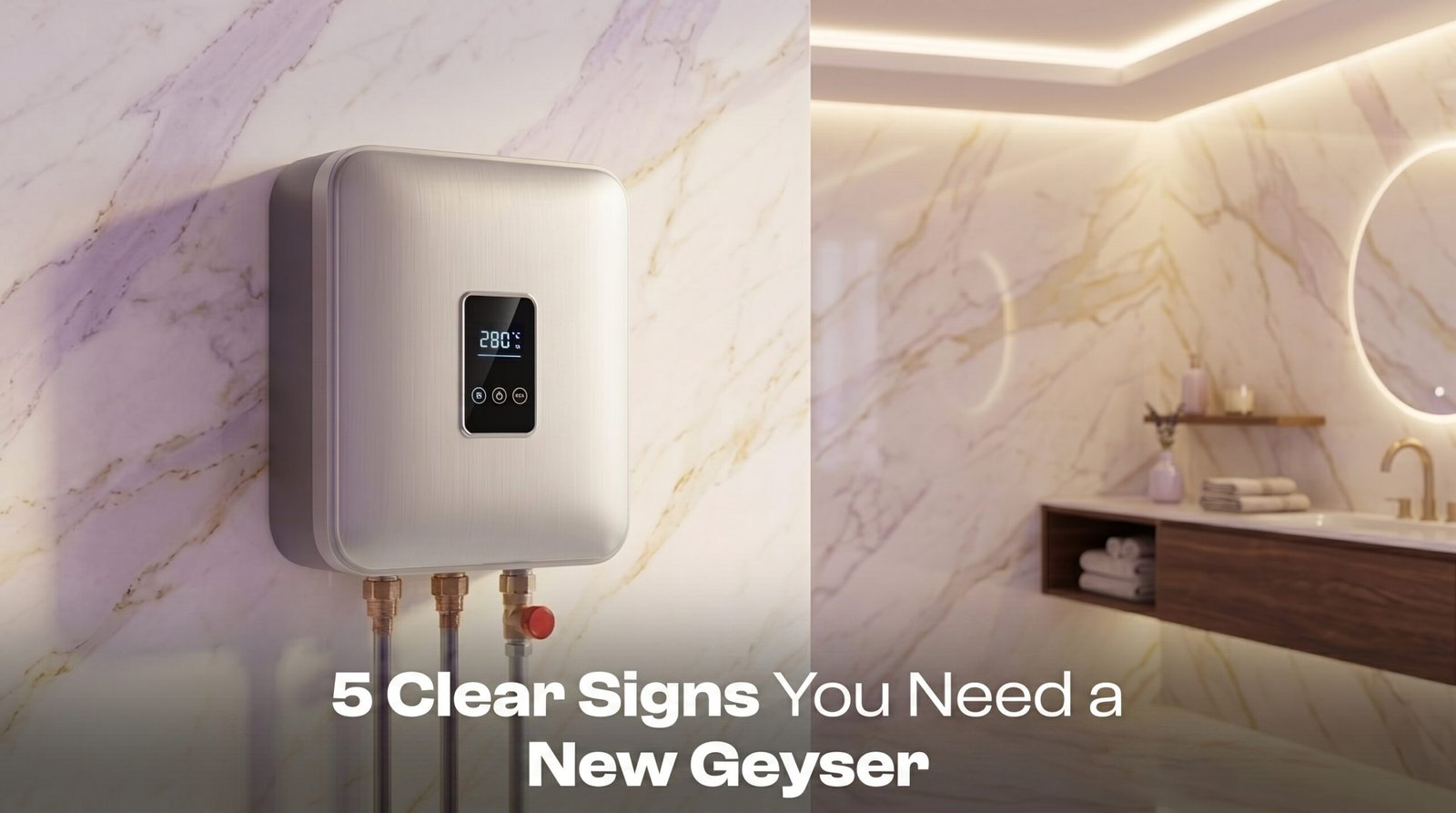
5 Clear Signs You Need a New Geyser

The Ultimate Buying Guide for Pakistani Homes
Hot water is no longer a luxury; it is an absolute necessity for daily survival during the chilling winters of Pakistan. Whether you are living in the freezing temperatures of Quetta, the crisp winter breeze of Islamabad, or dealing with the cold, damp months in Lahore and Karachi, a reliable water heater is the backbone of your household comfort. We use hot water every single day for showers, washing dishes, doing laundry, and maintaining general hygiene. Because it operates quietly in the background—often installed on the roof, in a utility balcony, or tucked away inside a bathroom—we completely take it for granted.
That is until the water suddenly turns ice-cold mid-shower, or the unit stops working altogether.
When your geyser begins to fail, it rarely happens without warning. If your water temperature fluctuates wildly, or you start hearing strange, aggressive banging sounds coming from the tank, these are not minor issues you can just ignore. They are urgent warning signs that your appliance is reaching the end of its life. Ignoring these symptoms can lead to high utility bills, massive internal structural damage, or worse—flooded bathrooms and catastrophic tank bursts.
The Core Problem: Why Water Heaters Degrade Over Time
Before analyzing the warning signs, it is important to understand why geysers degrade. In Pakistan, water quality varies drastically across different regions. Many cities rely heavily on groundwater (boring water), which is packed with heavy minerals, calcium, magnesium, and hard sediments.
Every single time your geyser heats water, these minerals separate and slowly settle at the very bottom of the internal storage tank. Over months and years, this soft sediment bakes under intense heat and turns into a rock-hard layer of scale. This scale acts as a thick, thermal barrier between the heating source (whether gas flames or electric elements) and the water itself. As a result, your geyser has to work twice as hard, burn significantly more fuel, and experience extreme internal stress that eventually destroys the structural integrity of the metal tank.
5 Clear Signs It’s Time to Replace Your Geyser
Sign #1 – Inconsistent Water Heating & Drastic Temperature Drops
Have you noticed that your morning shower starts out perfectly warm, but within two to three minutes, it turns shockingly cold? Or perhaps the water refuses to heat up past a lukewarm temperature, no matter how high you turn up the thermostat dial?
Inconsistent water heating is one of the most common and earliest indicators of a dying geyser. There are two primary culprits behind this issue:
- Severe Sediment Accumulation: When a thick layer of mineral scale coats the bottom of a gas geyser or completely covers the heating element of an electric geyser, heat transfer becomes highly inefficient. The geyser registers that it is working, but the heat cannot properly reach the water.
- Failing Heating Elements or Thermostats: In electric models, water heaters usually contain one or two heating elements. If one element burns out due to age or electrical surges, the geyser loses half its heating capacity. Similarly, an aging thermostat loses its accuracy, meaning it falsely shuts off the heating system before the water actually reaches the desired temperature.
If you find yourself constantly adjusting the thermostat knobs, waiting hours between showers just to get a single bucket of warm water, or dealing with unpredictable temperature drops, your geyser has suffered permanent thermal fatigue. Replacing it is the only permanent solution.
Sign #2 – Loud, Strange Noises (Rumbling, Popping, and Cracking)
A healthy, properly functioning geyser should operate almost silently. If you have a traditional storage gas geyser, you should only hear the gentle, consistent hum of the pilot burner and main flame. If you have an electric or instant model, it should run with practically zero noise.
However, as a geyser ages, it can start producing alarming sounds, such as:
- Loud Rumbling: Sounding like a miniature thunderstorm inside your bathroom or roof.
- Popping and Cracking: Sharp, distinct popping sounds whenever the unit activates.
- Sizzling or Whining: A high-pitched sound that indicates extreme strain.
What causes these scary noises?
As mentioned earlier, mineral sediment builds up at the bottom of the storage tank over time. When the burner underneath heats the tank, the water trapped beneath this hard layer of sediment begins to boil rapidly, converting into steam. As the steam bubbles burst through the heavy layer of mineral crust, it creates distinct popping, cracking, and loud rumbling noises.
This noise is a loud cry for help. It means your geyser is overheating locally at the base. Over time, this intense, concentrated heat weakens the steel metal of the tank, causing it to crack, warp, or leak. If you have already tried flushing the system and the noise persists, the internal damage is already done.
Sign #3 – Rusty, Muddy, or Discolored Hot Water
When you turn on your hot water tap, the water should run crystal clear. If the water coming out of your bathroom or kitchen faucets looks brownish, rusty, muddy, or has a distinct metallic smell, you are facing a severe issue.
Most high-quality geysers are built with an internal steel tank coated with glass-lined enamel to prevent rust. They also contain a sacrificial “Anode Rod” (usually made of magnesium or aluminum). The sole job of this rod is to attract corrosion so that the main steel tank stays safe. However, these anode rods completely dissolve after 3 to 5 years of regular use.
Once the anode rod is gone, the water begins to attack the bare steel walls of your geyser tank. Rust forms rapidly, flaking off into your hot water supply.
- The Health Hazard: Bathing, washing your face, or cleaning dishes with rusty water is unhygienic and can cause skin irritation, hair damage, and ruin your laundry by leaving stubborn yellow stains on clothes.
- The Structural Threat: Rust cannot be reversed or repaired. Once corrosion eats into the internal walls of the tank, the metal becomes paper-thin. It is only a matter of time before the water pressure causes a major, destructive rupture.
Important Check: To confirm the rust is coming from the geyser and not your main home pipes, turn on a cold-water tap. If the cold water is perfectly clear but the hot water is rusty, your geyser tank is actively corroding internally and must be replaced immediately.
Sign #4 – Active Water Leakage Around the Storage Unit
Finding a pool of water collecting underneath your geyser or noticing continuous moisture dripping down its outer body is an absolute red flag. Water and home appliances never mix well, and a leaking geyser is a ticking financial and safety clock.
When dealing with a leak, it is crucial to identify exactly where the water is coming from:
- External Fittings: If water is dripping from the external inlet/outlet pipe connections, the pressure release valve, or the drain valve, a plumber can easily fix it by replacing the washers, tightening the joints, or replacing the valve.
- Internal Storage Tank: If water is seeping directly through the metal outer shell, the bottom base of the unit, or from the internal body insulation, the tank itself has developed a physical crack.
As metal heats up, it expands; when it cools down, it contracts. After years of thousands of heating cycles, combined with internal rust and sediment damage, the metal tank develops microscopic fractures. There is absolutely no patch, weld, or chemical seal that can permanently fix a cracked internal geyser tank. If the core tank is leaking, you must turn off the gas/electricity supply instantly and purchase a new unit before the tank bursts and destroys your property.
Sign #5 – Your Geyser Has Exceeded Its Natural Lifespan (8–10+ Years)
Even if your geyser looks perfectly clean from the outside, time wins against all mechanical appliances. No water heater is designed to last forever. Depending on the specific technology you use, here is the realistic lifespan you can expect from your geyser in Pakistan:
Geyser Type | Average Expected Lifespan | Key Reason for Aging |
Traditional Gas Storage Geyser | 6 – 8 Years | Heavy base burning, rust from water condensation, pilot assembly wear. |
Electric Storage Geyser | 8 – 10 Years | Heating element burnout, scale accumulation, thermostat degradation. |
Instant Gas / Electric Geyser | 10 – 12 Years | Heat exchanger blockage, electronic circuit wear due to high moisture. |
Once your geyser crosses the 8-to-10-year threshold, its efficiency drops by more than 30% to 40%. It will take much longer to heat water, consume vastly more gas or units of electricity, and require frequent, frustrating repairs. Continuing to use an ancient geyser is a financial drain because you end up spending more money on inflated utility bills and local plumber fees than the cost of a brand-new, energy-efficient model.
Additional Hidden Warning Signs You Must Not Ignore
Apart from the major five signs, there are several subtle indicators that your water heater is failing or becoming dangerous:
- Sudden Skyrocketing Utility Bills: If your gas bills or electricity bills spike significantly during the winter without any change in your family’s usage habits, your geyser is working overtime. The thick sediment layers inside are forcing the machine to burn excessive energy to heat the exact same amount of water.
- Frequent Tripping of the Circuit Breaker: For electric geysers, if the unit suddenly starts tripping your home’s main electrical breaker or short-circuiting your DB box, it means the internal heating element has cracked open, allowing water to come into direct contact with live electrical wires. This is an extreme electrocution hazard!
- A Persistent Metallic Smell or Gas Odor: If your hot water smells strongly of metal, the tank is decaying. More importantly, if your gas geyser constantly smells of unburnt Sui gas, the internal gas valve or pilot safety mechanism has failed, posing a massive fire and suffocation risk to your family.
The True Benefits of Upgrading to a Modern Geyser
Many homeowners delay buying a new geyser because they view it as a painful, unplanned expense. However, upgrading to a modern water heater is actually an investment that pays for itself within a few winter seasons. Here is what you gain when you upgrade:
- Substantial Monthly Financial Savings: Modern geysers feature thick, high-density polyurethane foam (PUF) insulation. This advanced insulation traps heat inside the tank for up to 24 hours, meaning the geyser does not have to turn on repeatedly to keep the water hot. This translates directly to lower gas and electricity bills.
- Guaranteed Safety Features: Old-generation geysers lacked basic safety protocols. Modern units come equipped with advanced safety features, including Automatic Thermal Cut-offs (to prevent overheating), Safety Pressure Release Valves (to prevent tank explosions), and Flame-Failure Protection (for gas models).
- Instant and Reliable Comfort: No more waiting an hour for the next family member to take a bath. Modern instant and storage geysers provide super-fast heating, ensuring a continuous, reliable flow of warm water whenever you need it.
- Hygienic, Clean Living: A new tank means crystal-clear water completely free of toxic rust particles, mud, or bad odors, keeping your hair, skin, and clothes perfectly healthy.
How to Choose the Right New Geyser: The Ultimate Buying Roadmap
When you step into the Pakistani market or browse online stores, the sheer volume of choices can be overwhelming. To help you make a smart choice, here is the essential criteria you should follow:
1. Select the Ideal Type Based on Your Resources
- Gas Storage Geysers: Best suited for households that have a consistent, stable supply of natural Sui gas and have large families where hot water is needed across multiple bathrooms simultaneously.
- Electric Storage Geysers: Perfect for areas facing severe gas loadshedding or high-rise apartments where gas pipelines are unavailable. They are incredibly clean and easy to maintain but require proper management to avoid high power bills.
- Instant Gas Geysers: These tankless units heat water on-demand as it flows through the copper pipes. They consume zero energy when the tap is turned off, making them incredibly budget-friendly and great for small families or single bathrooms. However, they require decent water pressure to activate.
2. Match the Capacity to Your Family Size
Buying an oversized geyser wastes energy heating water you don’t need, while an undersized geyser leaves you freezing mid-shower. Use this simple guide:
- 10 to 15 Liters (Instant/Semi-Storage): Ideal for single individuals, couples, small kitchen hand-washing sinks, or a single compact bathroom.
- 25 to 35 Liters (Storage): The sweet spot for an average Pakistani family of 4 to 6 members sharing a bathroom.
- 50 Liters and Above: Reserved for large joint families, luxury houses with large bathtubs, or systems connected to multiple bathrooms across different floors.
3. Focus on Trusted Pakistani Brands
Never buy unbranded or locally assembled open-market geysers without safety certifications. Stick to trusted market leaders that offer genuine warranties, robust customer service, and readily available spare parts. Brands like Haier, Super Asia, NasGas, Canon, and Gree are highly recommended for their build quality, glass-lined inner tanks, and exceptional energy efficiency ratings.
How kiachahiye.com Makes Your Life Easier!
Choosing an appliance should not feel like rocket science. At kiachahiye.com, we do all the heavy lifting, research, and technical analysis for you. We understand the specific challenges faced by Pakistani consumers—from fluctuating gas pressures and electrical voltage drops to varying water qualities across different cities.
On our platform, we provide:
- Unbiased, Real-World Reviews: We evaluate appliances based on real performance, durability, and customer feedback.
- Detailed Price Comparisons: We track the latest market prices across Pakistan to ensure you buy at the absolute best rate without overspending.
- Step-by-Step Buying Guides: Whether you are looking for the best energy-saving electric geyser or the most reliable instant gas heater, we break down top models with their exact pros and cons.
Final Words
Your geyser is the silent guardian of your winter comfort. Don’t wait for it to break down completely in the dead of January, leaving your family stranded with ice-cold water and sudden emergency replacement costs.
Pay close attention to the warning signs: look for color changes in your water, listen to the sounds your tank makes, and keep track of its age. Upgrading to a modern, energy-efficient water heater at the right time is a smart, safe, and highly cost-effective investment in your home’s peace of mind.
Frequently Asked Questions (FAQs)
Q 1. How long does a standard geyser typically last in Pakistan? +
On average, a geyser lasts between 6 to 10 years. Traditional gas storage geysers generally last around 6–8 years due to direct flame wear, while electric and premium instant geysers can easily stretch up to 10–12 years if they are properly maintained and serviced regularly.
Q 2. Can a leaking water heater geyser be repaired? +
It depends entirely on the source of the leak. If water is dripping from external joints, pipe connectors, or the safety valve, it can easily be repaired for a small fee. However, if the internal storage steel tank has cracked or rusted through, it cannot be safely repaired. The entire geyser must be replaced.
Q 3. Why is my geyser taking a very long time to heat water now? +
The most common cause is heavy mineral and sediment buildup at the bottom of the tank or around the electric heating element. This thick layer acts as an insulator, stopping the heat from transferring smoothly to the water, which forces the geyser to run much longer to heat the same volume.
Q 4. How often should I get my home geyser serviced? +
It is highly recommended to get your geyser serviced once a year, right before the winter season starts (around October or November). A professional technician can flush out accumulated sediment, check the thermostat accuracy, and inspect safety valves to ensure smooth, efficient performance.
Q 5. Instant geyser vs. Storage geyser: Which one is better for saving money? +
Instant gas geysers are far superior for saving money because they are tankless. They only consume gas when a hot water tap is opened, meaning zero standby energy loss. Storage geysers, on the other hand, keep a large tank of water hot all day, which consumes more fuel. However, storage models are better for handling multiple taps at the same time.
Q 6. Is rusty hot water dangerous to use for daily chores? +
Yes. While it might not be immediately toxic upon skin contact, rusty water can cause skin dryness, scalp irritation, and hair damage. Additionally, it will permanently ruin your expensive clothes by leaving yellow-brown stains during laundry and can clog your bathroom faucets with rust flakes.
Q 7. What is the main purpose of a safety valve in a geyser? +
The safety valve (or pressure release valve) acts as a critical security backup. If the geyser thermostat fails and the water inside continues to boil uncontrollably, it creates extreme steam pressure. The safety valve automatically opens to release this excess pressure, preventing the tank from exploding.
Q 8. Why does my electric geyser trip the main home circuit breaker? +
This happens when the internal heating element's outer metal protective casing splits open due to corrosion. Water seeps inside and touches the live electrical filament, causing a direct short-circuit. If your breaker trips, turn off the geyser power immediately, as it poses a severe electric shock hazard.
Q 9. Does groundwater (boring water) reduce the life of a geyser? +
Yes, significantly. Boring water contains much higher levels of calcium, magnesium, and salt compared to treated tap water. This accelerates mineral scaling and internal rust, which can cut your geyser's natural lifespan in half if the tank is not flushed regularly.