







How to Clean a Microwave Oven Properly

The Ultimate Step-by-Step Guide Series
We all use our microwaves every single day. From reheating last night’s pizza to making a quick bowl of oatmeal, it is one of the most useful appliances in the kitchen. But let’s be honest: how often do we actually look inside and clean it? Over time, food splatters, grease, and bad odors build up inside.
If you leave these stains for too long, they harden and become incredibly tough to remove. Even worse, a dirty microwave can become a breeding ground for bacteria and can start affecting the taste of your food.
Fortunately, cleaning a microwave does not require expensive chemical cleaners or hours of hard scrubbing. In this detailed guide for kiachahiye.com, we will show you exactly how to clean a microwave oven properly using simple, everyday household items like vinegar, lemon, and baking soda.
Why You Must Clean Your Microwave Regularly
Before jumping into the cleaning methods, let’s understand why maintaining a clean microwave matters for your health and your appliance’s lifespan:
- Prevents Bacteria Growth: Food particles left inside can spoil and create bacteria, which can transfer to your fresh food.
- Improves Efficiency: A clean microwave works better. Hardened food absorbs some of the microwave energy, making it take longer to heat your actual meal.
- Eliminates Bad Odors: Burnt popcorn or old fish smells can linger for weeks if the interior surfaces are not cleaned.
- Extends Appliance Life: Keeping the vents and doors free of grease prevents mechanical strain and rust.
Essential Supplies You Need
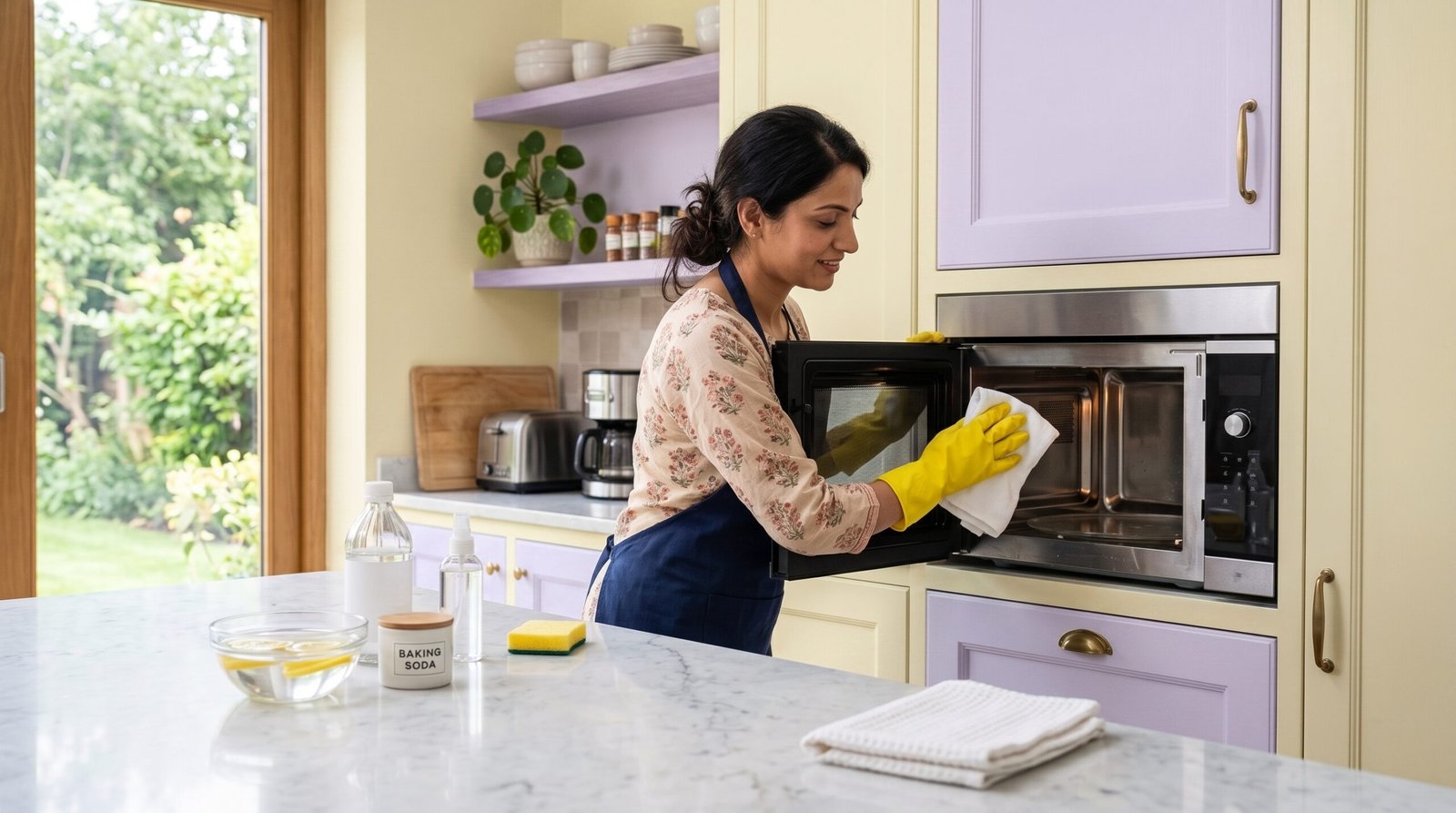
You do not need harsh chemical sprays. In fact, natural ingredients work much better because the steam does most of the heavy lifting. Gather these basic supplies before you begin:
- White vinegar
- Fresh lemons
- Baking soda
- Dishwashing liquid
- A microwave-safe bowl (glass or ceramic)
- Microfiber cloths or soft sponges
- Toothpicks or an old toothbrush (for tight corners)
- A dry towel
Method 1: The Classic Vinegar Steam Method (Best for Heavy Grease)
This is the most effective way to clean a microwave when it is covered in dried, baked-on food splatters. The vinegar steam softens the dirt so you can simply wipe it away.
- Prepare the Solution: Mix water and vinegar.
Take a microwave-safe bowl and fill it with 1 cup of water and 1 cup of white vinegar.
- Microwave on High: Create the steam (3-5 minutes).
Place the bowl inside the microwave. Close the door and run it on high power for 3 to 5 minutes, or until the liquid boils vigorously and fills the interior with steam.
- Let it Sit: Trap the steam (5 minutes).
Once the timer goes off, do not open the door immediately. Leave the door closed for another 5 minutes. This allows the trapped steam to fully loosen up the stuck-on grease.
- Wipe It Out: Easy cleaning.
Carefully remove the hot bowl (use oven mitts). Take a soft sponge or microfiber cloth and wipe down the ceiling, walls, floor, and door of the microwave. The dirt should slide right off!
Method 2: The Fresh Lemon Method (Best for Eliminating Odors)
If your microwave smells like burnt food, lemon is your best friend. It contains natural citric acid which cuts through grease while leaving a beautiful, fresh scent.
- Slice the Lemon: Cut one fresh lemon in half and squeeze some of the juice into a bowl filled with 1 cup of water. Drop the lemon halves directly into the bowl.
- Boil the Mixture: Place the bowl inside and microwave on high for 3 to 5 minutes until it steams up.
- Wait and Rest: Keep the door closed for 5 minutes so the citric steam can deodorize the walls.
- Wipe and Shine: Open the door, remove the bowl, and wipe down the interior. Use the damp cloth to clean the exterior handle and buttons as well.
Method 3: The Baking Soda Paste (Best for Tough, Burnt Stains)
Sometimes, dark burnt spots or yellow grease patches refuse to come off with just steam. For these stubborn spots, baking soda works beautifully as a gentle, non-abrasive scrub.
- Make the Paste: Mix 2 tablespoons of baking soda with 1 tablespoon of water in a small cup to create a thick paste.
- Apply to Stains: Spread the paste directly onto the stubborn burnt food spots or greasy patches. Let it sit for 5 to 10 minutes.
- Scrub Gently: Use a damp sponge to gently scrub the spot in circular motions. The baking soda will lift the stain without scratching the microwave’s interior coating.
- Rinse Clean: Wipe the area with a clean, wet cloth to remove any powdery residue.
Don’t Forget: Cleaning the Parts and Exterior
A proper deep clean means paying attention to the pieces you might normally skip over.
1. The Turntable (Glass Plate) and Roller Ring
Take the glass plate and the plastic roller ring completely out of the microwave. You can wash them in your sink just like regular dishes using warm water and dish soap. If the glass plate has greasy buildup, let it soak in warm soapy water for 10 minutes before scrubbing. Dry them thoroughly before putting them back.
2. The Microwave Door and Rubber Gasket
The rubber seal (gasket) around the door keeps the microwave energy contained. Over time, crumbs and grease get trapped in this seal. Dip a cloth in warm water mixed with a little dish soap and wipe all along the rubber edges.
3. The Control Panel and Exterior
Never spray water or liquid cleaners directly onto the control panel or buttons, as liquid can seep inside and ruin the electronics. Instead, spray a little glass cleaner or vinegar solution onto a cloth first, and then gently wipe the buttons, handle, and outer body clean.
Pro-Tips to Keep Your Microwave Clean Longer
- Use a Microwave Cover: Always cover your bowls or plates with a microwave-safe plastic lid or a paper towel to stop food from exploding onto the ceiling.
- Wipe Spills Immediately: If soup overflows or sauce splatters, spend 10 seconds wiping it with a damp paper towel right away before it hardens.
- Leave the Door Ajar: After heating smelly food, leave the microwave door slightly open for a couple of minutes to let the steam and odors escape.
Summary Table of Microwave Cleaning Methods
Cleaning Agent | Best For | Mixing Ratio |
White Vinegar | Heavy grease and hard, dried-on food | 1 cup water + 1 cup vinegar |
Fresh Lemon | Neutralizing bad odors and light grease | 1 cup water + 1 sliced lemon |
Baking Soda | Removing dark burnt marks and sticky spots | 2 tbsp baking soda + 1 tbsp water |
Hopefully, this complete guide on kiachahiye.com helps you keep your microwave fresh, shiny, and running smoothly for years to come! Clear out those old splatters today using these easy kitchen hacks.
Frequently Asked Questions (FAQs)
Q1. Can I use bleach to clean the inside of my microwave? +
No, you should never use bleach or harsh abrasive chemicals inside a microwave. Bleach can damage the interior lining and weaken the appliance. Additionally, any chemical residue left behind can contaminate your food when you heat it later.
Q2. How often should I deep clean my microwave? +
If you use your microwave daily, you should give it a quick wipe once a week and a deep steam clean (using vinegar or lemon) once every two weeks or at least once a month.
Q3. What causes a microwave to spark, and how do I clean it? +
Sparks are usually caused by metal (like foil) or dried food splatters on the wave-guide cover (the small cardboard-like panel on the inside wall). Clean any grease off this panel very gently with a damp cloth. If it is damaged or burnt, it needs to be replaced.
Q4. Is it safe to clean a microwave with apple cider vinegar? +
Yes! While white vinegar is most common, apple cider vinegar works just as well to cut through grease and soften stains. It will just leave a slightly sweeter, apple-like smell behind.
Q5. How do I get rid of a stubborn burnt smell from my microwave? +
Place a bowl of plain baking soda or activated charcoal inside the microwave and leave the door closed overnight (do not turn it on). The powder will naturally absorb the odor.
Q6. Can I wash my microwave glass turntable in the dishwasher? +
Yes, most microwave glass plates are dishwasher safe. However, make sure to let it cool down to room temperature before putting it in the dishwasher, as hot glass can crack when exposed to cold water.
Q7. Why is the inside of my microwave turning yellow? +
Yellowing is usually caused by grease buildup from cooking oils and splattered food over a long period. Regular steaming with lemon or a light scrub with baking soda paste can help remove these yellow stains.
Q8. What should I do if the microwave door handle is sticky? +
Mix a few drops of dish soap with warm water, dip a microfiber cloth in it, and scrub the handle. For stubborn stickiness from grease, wipe it down with rubbing alcohol on a cotton pad.
Q9. Can I use a metal scouring pad to scrub tough stains? +
Absolutely not. Metal scouring pads or steel wool will scratch and strip away the protective interior coating of your microwave, which can lead to rust and serious safety hazards. Stick to soft sponges or microfiber cloths.
Q10. Is it dangerous if the internal walls of my microwave start rusting? +
Yes, if the paint or coating chips off and the metal underneath starts rusting, it can cause electrical arcing (sparking) and ruin the machine. If you see deep rust holes inside, it is time to replace the microwave.