








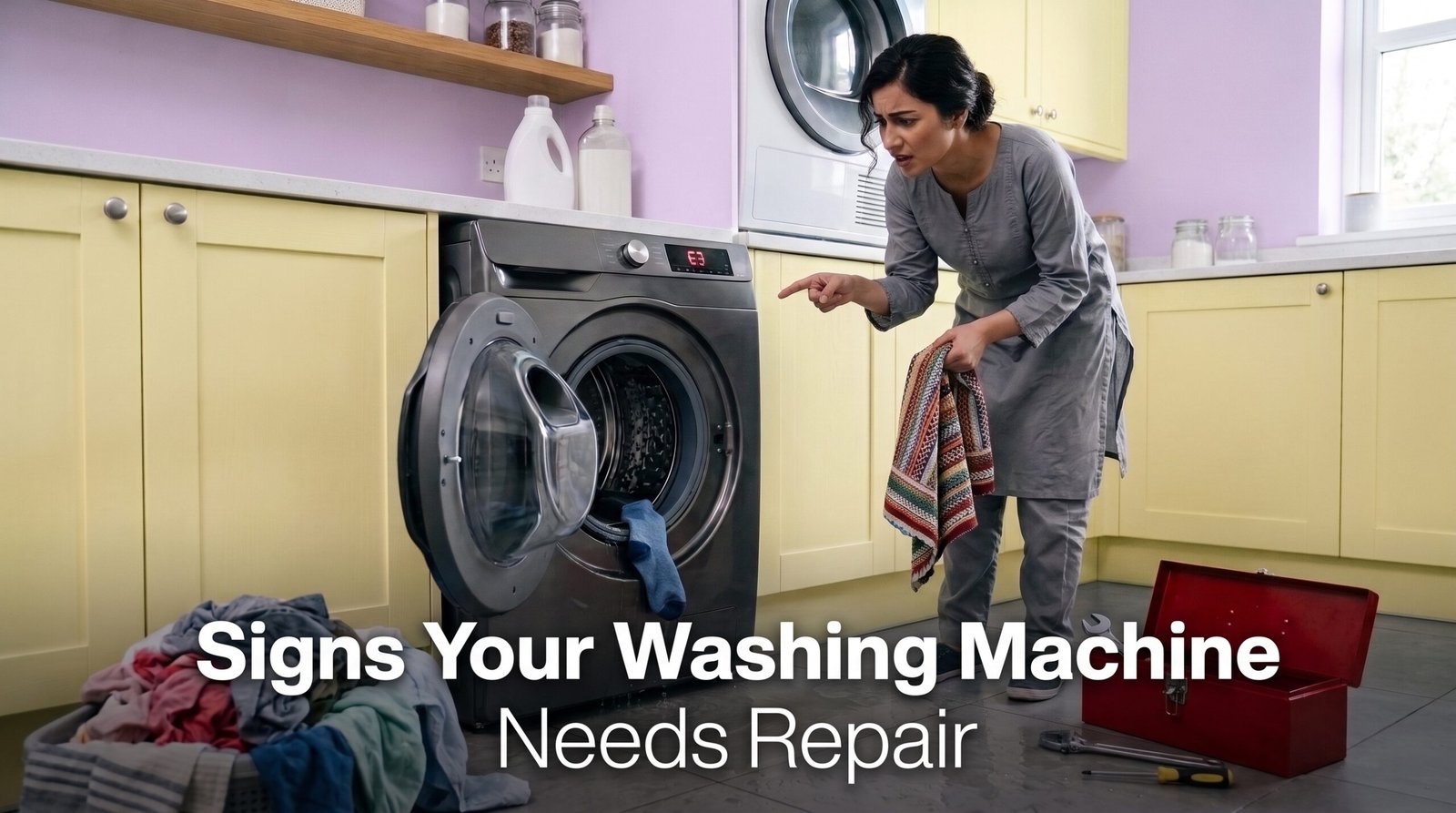
Signs Your Washing Machine Needs Repair

The Ultimate Guide
A washing machine is one of the most important appliances in any household. It saves us hours of manual labor and keeps our clothes fresh and clean. However, like any other mechanical appliance, your washing machine won’t last forever without a little care.
Over time, constant use leads to wear and tear. Often, your washing machine will try to tell you that something is wrong long before it completely stops working. Ignoring these minor warning signs can turn a simple, cheap fix into an expensive disaster—or worse, force you to buy a brand-new machine.
In this ultimate guide, we will break down the clearest signs that your washing machine needs immediate repair, why these problems happen, and what you should do next.
1. Excessive and Unusual Noise
It is completely normal for a washing machine to make some hums, clicks, and whirring sounds during a cycle. However, if your laundry room suddenly sounds like a jet engine taking off, you have a problem.
What to listen for:
- Thumping or Banging: This usually happens during the spin cycle.
- Grinding or Squeaking: A sharp, metallic sound that persists throughout the wash.
- Scraping: The sound of metal rubbing against metal.
The Causes:
Most of the time, heavy thumping means the load is unbalanced (e.g., washing a single heavy blanket with light t-shirts). If the noise happens even when the machine is empty, your drum bearings, drive pulley, or motor might be worn out. Squeaking often indicates that the machine needs lubrication or a belt is slipping.
Pro Tip: If you hear a loud banging noise, pause the machine immediately and rearrange the clothes evenly inside the drum. If the noise continues on the next empty wash, call a technician.
2. The Machine is Rocking, Shaking, or “Walking”
Have you ever walked into your laundry room only to find your washing machine has moved a foot away from its original spot? This violent shaking or “walking” is a major red flag.
The Risks:
A violently shaking machine doesn’t just damage itself; it can tear the water supply hoses, break the drain lines, cause massive floods, or crack your flooring.
The Causes:
- Unlevel Flooring: If the washing machine’s feet are not perfectly level with the floor, it will rock violently during high-speed spins.
- Worn Shock Absorbers: Front-load washers use shock absorbers to dampen the drum’s movement. When these wear out, the drum hits the outer chassis.
- Snubber Ring / Suspension Springs: In top-load washers, broken springs fail to keep the tub centered.
3. Water Leaking from the Machine
Water leaking anywhere near your washing machine is an emergency. Even a tiny puddle can quickly lead to toxic mold growth, rotted floorboards, and ruined drywall.
Where to check for leaks:
- The Back of the Machine: Usually points to cracked, loose, or old water inlet hoses.
- The Front Door (Front-Loaders): Indicates a ripped, punctured, or dirty rubber door gasket (seal).
- The Bottom of the Machine: This can mean a cracked water pump, a leaky internal hose, or a rusted tub.
The Fix:
Check if the hose connections are tight. If the leak is coming from the rubber door seal or from underneath the machine, stop using it immediately and seek professional repair to avoid flooding your home.
4. The Drum Won’t Spin or Agitate
Your machine might fill up with water, but when it’s time to actually wash or spin the clothes dry, nothing happens. You open the lid only to find your clothes sitting in a pool of soapy, stagnant water.
The Causes:
- Broken Drive Belt: The belt connects the motor to the drum. If it snaps or slips off, the motor will run, but the drum won’t move.
- Lid Switch or Door Latch Failure: For safety reasons, washing machines will not spin if they think the door is open. If the sensor is broken, the machine stays dead.
- Worn Motor Brushes: Carbon brushes inside the motor wear down over time, preventing the motor from turning.
5. Water is Not Draining Out
Finding a tub full of dirty, murky water at the end of a cycle is incredibly frustrating. If your clothes come out soaking wet and dripping, your drainage system is failing.
[Wash Cycle] ➔ [Drain Failure] ➔ [Trapped Dirty Water] ➔ [Smelly, Soaking Clothes]
The Causes:
- Clogged Drain Filter: Most modern machines have a coin trap or filter at the bottom front. Coins, bobby pins, socks, and lint get stuck here and block water flow.
- Kinked or Blocked Drain Hose: The grey hose at the back might be pinched against the wall or choked with lint.
- Broken Drain Pump: If the pump motor burns out, it cannot physically push the water out of the machine.
6. Foul Odors and Smelly Clothes
If your freshly washed clothes smell musty, sour, or like damp mildew, your washing machine is acting as a breeding ground for bacteria.
Why does it smell?
This is a very common problem with high-efficiency (HE) and front-loading washing machines. Soap scum, fabric softener residue, dirt, and body oils build up in the hidden crevices behind the drum and inside the rubber door boot. Combined with moisture, this creates the perfect environment for mold.
Prevention & Repair:
Leave the washing machine door open after every single wash to let it dry completely. Run a monthly hot clean cycle with white vinegar or a dedicated washing machine cleaner. If the smell persists, the mold may have taken over internal hoses, requiring a technician to clean or replace them.
7. Clothes are Damaged After a Wash
Your washing machine is supposed to clean your clothes, not destroy them. If you notice new mystery holes, rips, tears, or pulled threads on your fabrics, your machine might be attacking them.
The Causes:
- Chipped Drum: If a zipper or coin scratched the plastic or stainless-steel drum in the past, it might have left a sharp, jagged edge that snags delicate clothing.
- Broken Agitator: In top-load washers, a cracked plastic agitator can trap and tear clothes.
- Incorrect Spin Speed: High spin speeds meant for towels can ruin delicate items if not sorted correctly.
8. The Machine Fills with Water, But Doesn’t Stop
If your washing machine keeps drawing water continuously, filling up until it overflows or automatically drains, you have a faulty internal sensor control.
The Causes:
- Defective Water Inlet Valve: This valve opens and closes to let water in. If it gets stuck mechanically in the “open” position, water will flow non-stop even if the machine is turned off.
- Broken Pressure Switch: This switch measures the air pressure inside a tube to calculate how high the water level is. If the switch or tube fails, the machine never realizes it is already full.
9. Error Codes on the Digital Display
Modern washing machines are quite smart. When something goes wrong inside the electronic brain, the control panel will flash an error code (such as E1, F21, LE, or 4E depending on the brand like Samsung, LG, or Whirlpool).
What to do:
Never ignore an error code, even if turning the machine off and on makes it temporarily disappear. Look up the specific code in your user manual or on the manufacturer’s website. It will tell you exactly which component (heater, sensor, pump) is failing.
10. Sudden Jump in Utility Bills
Have you noticed your monthly electricity or water bills spiking without an obvious reason? Your washing machine could be the hidden culprit.
Why this happens:
When internal components like the motor or heating element begin to fail, they have to work twice as hard to achieve the same results. A cycle that used to take 45 minutes might now drag on for 90 minutes because the machine is struggling to heat the water or drain properly. This extra runtime drains your wallet.
Knowing When to Repair vs. Replace
Before you call a repair technician, consider the “50% Rule”:
Machine Age | Cost of Repair | Best Decision |
Less than 5 years old | Any reasonable price | Repair |
5 to 8 years old | Less than 50% of a new machine | Repair |
5 to 8 years old | More than 50% of a new machine | Replace |
More than 10 years old | Any major repair cost | Replace |
Summary Checklist for Homeowners
To keep your washing machine running perfectly and avoid costly repairs, remember this quick checklist:
- Do not overload: Leave enough space for your hand to fit comfortably at the top of the drum.
- Check pockets: Coins, keys, and tissues are the number one enemies of drain pumps.
- Use the right soap: Never overdose on laundry detergent.
- Air it out: Keep the door cracked open between loads to prevent mold.
Frequently Asked Questions (FAQs)
Q1. Why does my washing machine smell like rotten eggs? +
A rotten egg or sulfur smell is usually caused by bacteria growing on trapped soap scum, lint, and hair inside the rubber door seal or drain hose. Run an empty hot water cycle with two cups of bleach or washing machine cleaner to sanitize it.
Q2. Is it normal for a washing machine to shake a little bit? +
Yes, minor vibrations are normal, especially during high-speed spinning. However, if the machine violently thumps, bangs against the walls, or shifts its position on the floor, it is unbalanced or has broken suspension components.
Q3. How often should I clean my washing machine filter? +
You should locate and clean your washing machine's drain pump filter once every 1 to 3 months. This prevents clogs, improves draining speeds, and eliminates bad smells.
Q4. Why are my clothes coming out covered in white lint or residue? +
This is typically caused by overloading the machine, using too much detergent, or a failing water pump that isn't rinsing away the dirty water properly.
Q5. Can a DIY novice fix a leaking washing machine? +
If the leak is caused by a loose external hose coupling or a dirty door seal, you can easily clean or tighten it yourself. However, internal leaks from the pump, tub, or valves require professional disassembly.
Q6. Why does my washer take so long to finish a single cycle? +
If a cycle drags on, your machine is likely having trouble heating the water (faulty heating element) or pumping the water out (clogged drain). The machine pauses its internal timer until these steps are completed.
Q7. Why is my top-load washing machine tearing my clothes? +
Check the central plastic agitator for cracks or sharp burrs. Also, inspect the inside of the drum by running a pair of old nylon stockings over it; if the stockings snag, you have a sharp metal edge damaging your laundry.
Q8. What happens if I use regular detergent in a High-Efficiency (HE) washer? +
Regular detergent creates too many suds for an HE washer. These excess suds can overflow, confuse the machine's sensors, cause error codes, and lock up the drain pump. Always look for the "HE" logo on your detergent bottle.
Q9. How long do washing machines typically last? +
On average, a well-maintained modern washing machine lasts between 8 to 12 years. Front-loaders often require bearing replacements sooner than top-loaders due to the heavy stress placed on the horizontal axis.
Q10. Is it worth repairing an 8-year-old washing machine? +
It depends on the repair cost. If it’s a cheap fix like a new belt or door latch, go ahead and repair it. If it requires a new motor, transmission, or electronic control board, it is smarter to invest that money into a new, energy-efficient model.